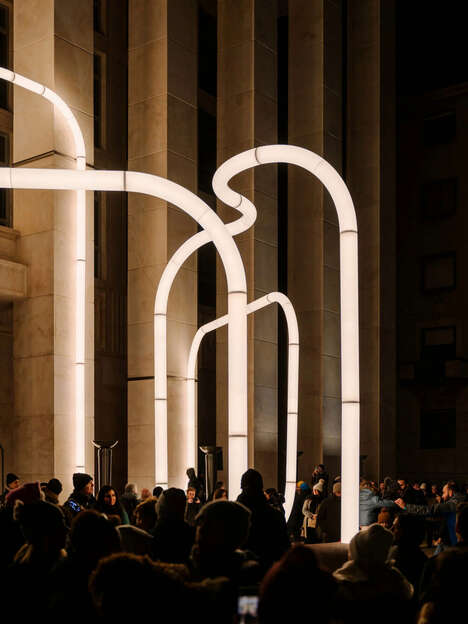
'Light Pollination' is an interactive light installation commissioned by iGuzzini and designed by London-based art and design firm Universal Assembly Unit for the 2016 London Design Festival. The display, which is being shown in South Kensington, features an obliquely geometrical series of anemone-like lights that react to stimuli from observers.
Light Pollination consists of 20,000 LEDs that shine throughout fiber-optic cables. These cables are embedded with sensors that detect incoming light from exterior sources. The entire Light Pollination exhibit is connected to software that causes shimmering and color-changing effects when observers shine lights (such as their cellphone lights) on the piece. The result is a complex and adaptive exhibit that both mimics bioluminescence in nature and makes a statement about the relationship between digital technology and nature in the modern day.
What Makes This Trend Stand Out
- Interactive Light Installations
- Opportunity for creating unique and engaging experiences through interactive light installations.
- Bioluminescent Design
- Potential for incorporating bioluminescent elements into various design applications, creating a visually captivating effect.
- Technology-nature Integration
- Potential for exploring the intersection of digital technology and nature, in order to create art and design installations that provoke thought and conversation.
Sectors Adopting This
- Art and Design
- Artists and designers can leverage interactive light installations and bioluminescent design to create captivating visual experiences that engage viewers.
- Event Planning
- Event planners can incorporate interactive light installations into their events to enhance the atmosphere and create a memorable experience for attendees.
- Museum and Exhibition
- Museums and exhibitions can utilize bioluminescent design to create immersive and interactive displays that captivate visitors and provoke discussion.