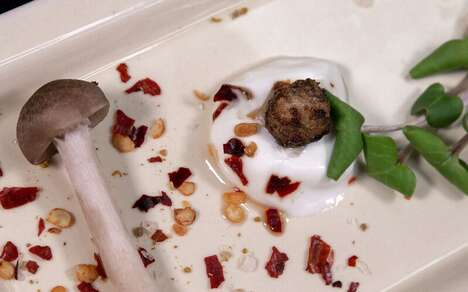
This lab-grown meatball was created by Memphis Meats, a San Francisco-based startup that wants to grow beef and pork in a laboratory setting.
The meatballs are grown by isolating pig and cow cells that have regenerating capabilities, before providing them with essential nutrients and oxygen. The cells develop inside special bioreactor tanks into muscle, which can be harvested in a couple of weeks time and used to make meatballs.
Lab-grown meat has been researched in the past, but Memphis Meats has taken a big step towards bringing this sort of meat to market by demonstrating its capabilities with the lab-grown meatball. This technology could help take some train off the animal agriculture industry and reduce both the financial and environmental costs of raising farm animals for the meat industry.
What's Driving This Trend
- Lab-grown Meat
- Memphis Meats is revolutionizing the food industry by growing beef and pork in a laboratory setting through isolating pig and cow cells that have regenerating capabilities.
- Sustainable Meat Production
- The use of lab-grown meat could significantly reduce the environmental impact of traditional, animal agriculture farming practices.
- Food Industry Disruption
- Lab-grown meat has the potential to disrupt the meat industry as it provides a more sustainable, cruelty-free and cost-effective solution.
Who This Affects Most
- Food Industry
- The food industry has significant potential to reduce environmental impact and production costs by adopting lab-grown meat technology.
- Agriculture
- Reduced animal farming needs could have potential impact on the animal agriculture industry, creating opportunities for innovation in sustainable meat production.
- Biotechnology
- The biotech industry can play a critical role in developing and scaling up lab-grown meat production technology.