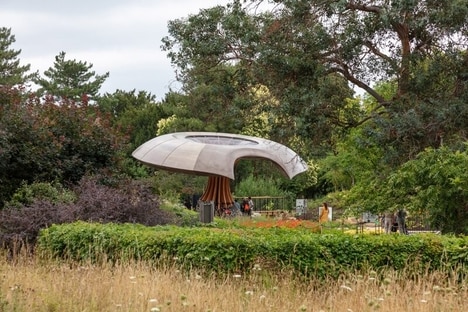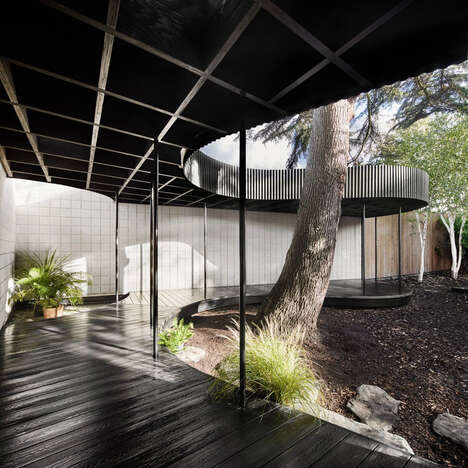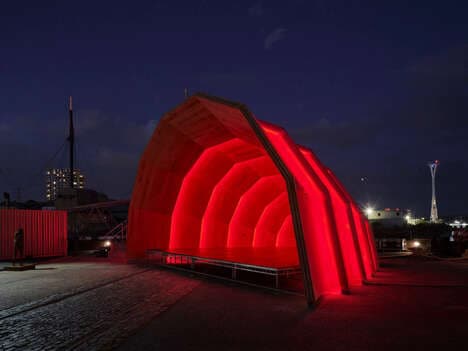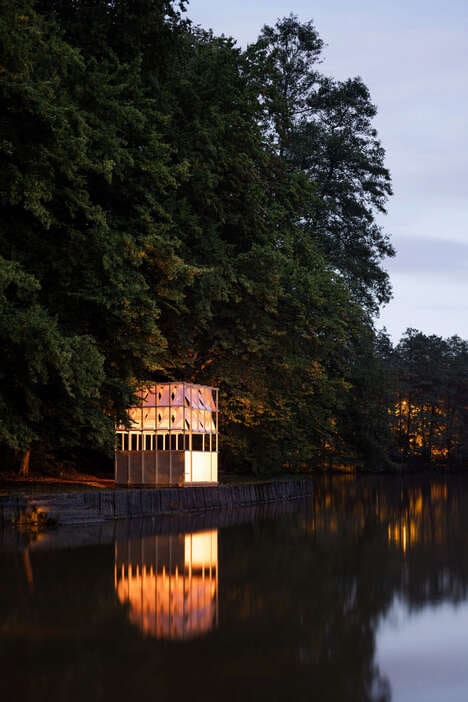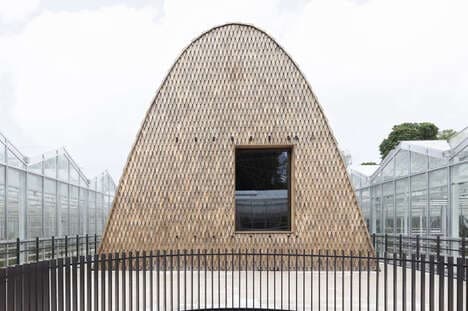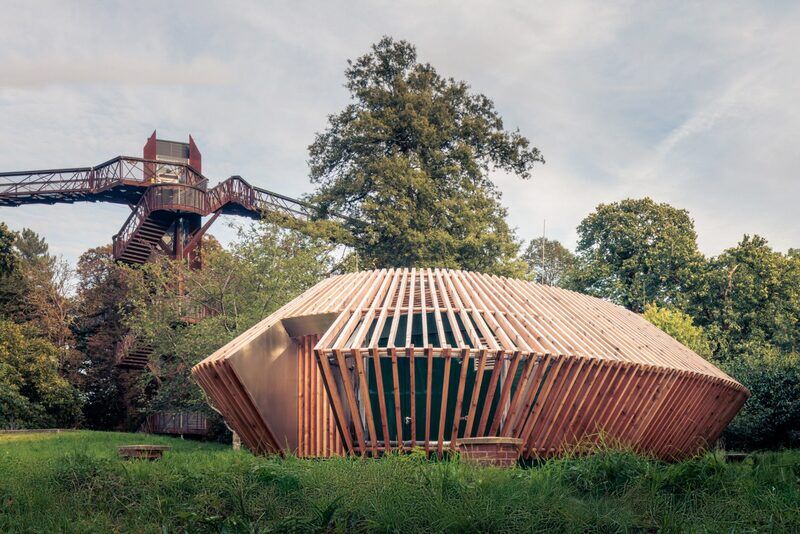
British design firm Hugh Broughton Architects has completed the Kew Pumping Station. It is a timber structure that is formed by interlocking larch slats to form a screen around a pump house in Kew Gardens. The structure has an oval shape resting over an underground tank that stores 280,000 liters of water. It is a part of a new irrigation technique taking place at the Royal Botanical Gardens.
The project architect of the design, Steve McCloy shared with Dezeen, "The design had to be functionally efficient, economically designed and, as a piece of small architecture, had to achieve a level of sensitivity and design quality worthy of its famously beautiful surroundings." He adds, "The side elevation of the enclosure, which is made up of an array of interlocking self-similar timber modules, recalls the palm fronds that are gloriously displayed in Kew's most iconic glasshouse."
Image Credit: Dirk Lindner
What Makes This Trend Stand Out
- Sustainable Architectural Materials
- The use of interlocking larch slats showcases a shift towards renewable resources in designing functional structures.
- Aesthetic Utility Design
- Architecturally appealing yet functional utility structures demonstrate the potential for combining design with practicality.
- Innovative Irrigation Systems
- Modern irrigation techniques, such as those utilizing underground tanks, are transforming water management in public gardens.
Sectors Adopting This
- Green Architecture
- The integration of environmentally friendly materials like timber into building designs is redefining the green architecture sector.
- Urban Infrastructure
- Advancements in incorporating design elements into infrastructure projects are revolutionizing urban planning.
- Landscape Management
- The development of advanced irrigation systems indicates a transformation in how large public gardens are maintained.