Protein bars have become the norm for many macro-minded consumers but come with a long laundry list of ingredients, which is something the Jacked Granny bars help to combat against.
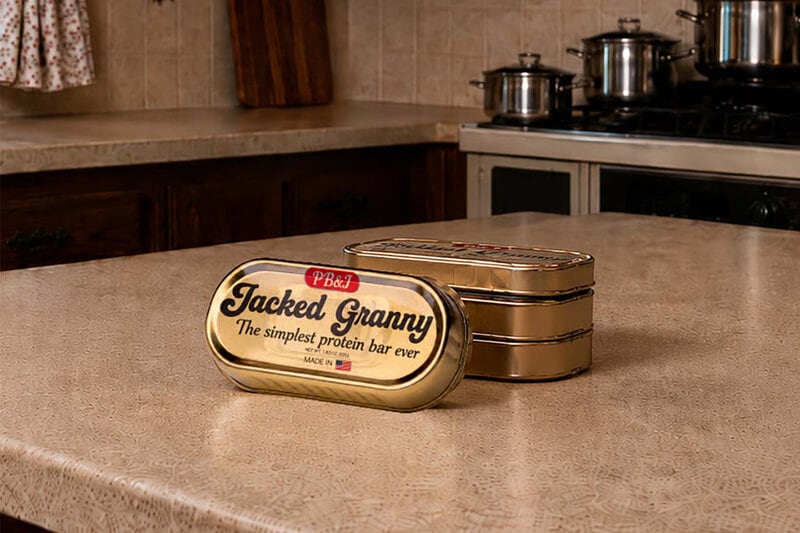
The brand boasts bars with the simplest ingredients possible to maximize nutritional density without the need for unwanted inclusions with the base recipe featuring only peanuts, maple syrup and egg whites. The bars add in an ingredient for the two additional flavor options including Dark Chocolate, Coconut and PB&J. Each bar features a modest 16-grams of protein, 20-grams of carbohydrates, around two-grams of fat and 180-calories.
The Jacked Granny protein bars come in tin cans to give them an unorthodox packaging style, which thus enables them to avoid preservatives.
What's Driving This Trend
- Preservative-free Performance Snacks
- Minimal-ingredient protein bars point to growth potential in shelf-stable nutrition products that rely on processing and packaging innovation rather than synthetic additives.
- Canned Snack Packaging
- Unconventional canned formats are reshaping expectations for bars and bites by combining portability, freshness protection and visual differentiation in crowded wellness aisles.
- Simple-recipe Protein Foods
- Short ingredient lists are creating space for premium functional foods that balance macro-friendly nutrition with cleaner labels and greater consumer trust.
Who This Affects Most
- Functional Foods
- Protein-focused snacks with recognizable ingredients highlight opportunities for brands to merge performance nutrition with mainstream clean-label eating habits.
- Food Packaging
- Tin-based preservation for snack bars signals renewed relevance for durable packaging systems that extend freshness while reducing dependence on preservatives.
- Health and Wellness Retail
- Retail environments centered on fitness and nutrition can benefit from distinctive clean-label products that stand out through both formulation simplicity and packaging novelty.