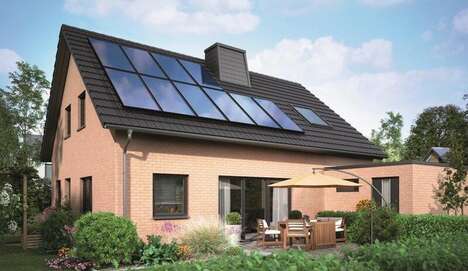
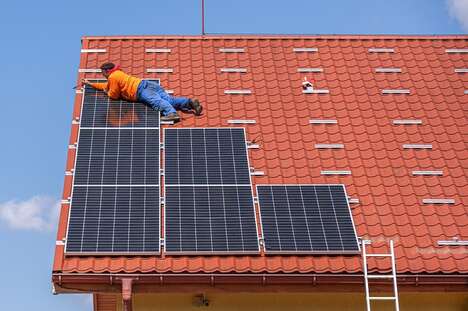
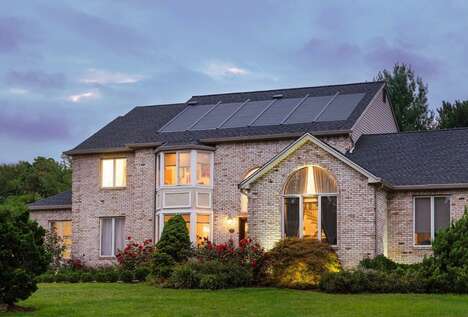
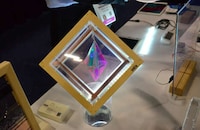
Dyaqua designs the new Invisible Solar Panels that are a perfect solution for renewable power sources and aids in reducing greenhouse gas emissions. Notably, it is designed to blend into historical and heritage buildings without disrupting the design language due to the futuristic look of traditional solar panels.
The Invisible Solar Panels resemble the look of barrel clay tiles that are actually made with cells that lie underneath in order to generate solar energy and power the building. Each panel is able to reach a peak energy capacity of 7.5 watts and it weighs about 2 kilograms per tile. Additionally, these tiles can also be used for siding or pavement as it also functions as surface protection.
Image Credit: Dyaqua
Key Themes Behind This Trend
- Invisible Solar Panels
- The trend of incorporating solar panels that blend into the design of buildings and infrastructure to improve uptake and reduce the visual impact of renewable energy.
- Heritage Building Integration
- The trend of integrating renewable energy technology into existing heritage buildings while maintaining their aesthetics and historical significance.
- Multi-purpose Solar Panels
- The trend of designing solar panels that can serve multiple purposes, such as surface protection and energy generation, to increase their utility and value.
Where This Applies
- Architecture
- Architects and designers can leverage invisible solar panels as a means to make the buildings they design more sustainable without disrupting the aesthetic of the surrounding environment.
- Construction
- The construction industry can make use of invisible solar panels to create sustainable buildings that are both functional and beautiful.
- Renewable Energy
- Renewable energy companies can develop innovative solar panel technology that is more versatile and can be integrated into a wider range of buildings and infrastructure.