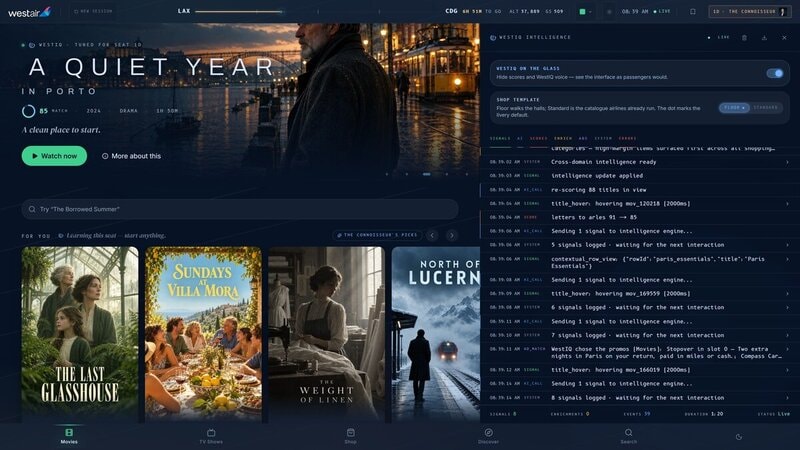
West Entertainment is expanding its airline software with 'WestDigital,' a new AI unit built around 'WestIQ' that reads 50 in-session passenger cues, enabling airlines to tailor what each traveler sees during a flight. It works across existing in-flight entertainment and connectivity software (IFEC) and other digital touchpoints without replacing the passenger-facing screen.
Rather than relying on viewing history alone, WestIQ reacts to scrolling or pauses to surface a film, a meal offer, or destination information that fits the moment. Each airline's data remains in its own encrypted environment, with loyalty links added only through the carrier's systems when passengers opt in.
Using it feels less like a fixed menu and more like a responsive seatback or streaming session, with 'StreamIQ' and 'TOM' sharpening recommendations and scene-based offers as someone browses. West Entertainment plans live demos of the WestDigital lineup at APEX FTE EXPO in Singapore, including WestIQ at booth 307.
Image Credit: West Entertainment
Key Themes Behind This Trend
- Contextual Passenger Personalization
- Real-time interpretation of browsing behavior, pauses, and engagement cues creates new potential for adaptive travel experiences that move beyond static entertainment menus.
- Privacy-safe Airline AI
- Encrypted, carrier-controlled data environments are reshaping how airlines personalize services while maintaining passenger trust and regulatory alignment.
- In-flight Retail Media
- Seatback screens and connected flight touchpoints are evolving into commerce channels where meals, destination content, and offers can be matched to passenger intent.
Where This Applies
- Airline Technology
- AI layers that work across existing IFEC systems open pathways for airlines to modernize passenger engagement without replacing installed hardware.
- Travel Retail
- Moment-based recommendations during flights introduce fresh revenue models for brands, destinations, and service providers targeting captive travel audiences.
- Entertainment Software
- Responsive content discovery systems are expanding the role of streaming-style interfaces into transportation environments with personalized media and commerce integration.