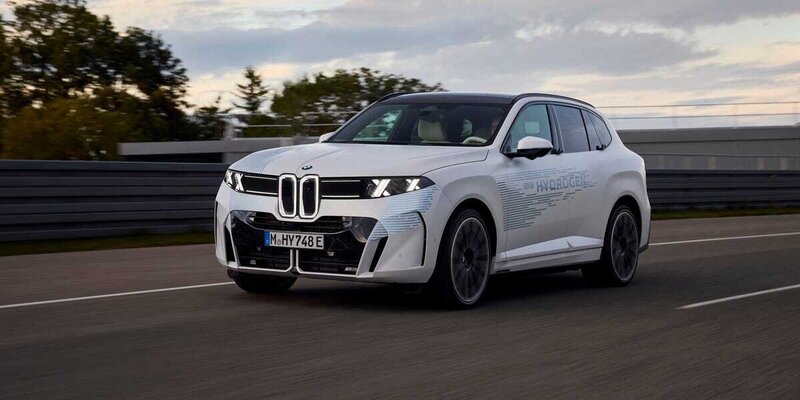
BMW is continuing to advance the iX5 Hydrogen, a fuel-cell SUV prototype that pairs electric propulsion with onboard hydrogen storage and an Energy Master control unit. The automaker is conducting real-world prototype validation while moving assembly of its third-generation fuel-cell system into a new phase at its Hydrogen Competence Centre in Munich. Plant Steyr is preparing production equipment to transfer lessons from prototype assembly into series manufacturing.
Engineers are validating how the fuel-cell system, electric motor, high-voltage battery and hydrogen tanks interact while tuning vehicle dynamics. BMW aims for performance comparable to its battery-electric iX5, including a 0-to-60-mph sprint in under five seconds and improved regenerative braking. The iX5 Hydrogen uses a fuel-cell architecture developed jointly with Toyota.
For drivers, the system promises an estimated WLTP range of up to 750 kilometers, or 466 miles, and refueling in under five minutes. The project advances BMW’s technology-open strategy, allowing the automaker to address demand for longer-range, quick-refueling vehicles while adding hydrogen to its broader powertrain portfolio.
Image Credit: BMW
What's Driving This Trend
- Hydrogen Electric Suvs
- Fuel-cell SUVs create room for premium automakers to differentiate long-range electric mobility with fast refueling and familiar performance benchmarks.
- Technology-open Powertrains
- Multi-path propulsion portfolios reflect a shift toward flexible electrification strategies that can serve varied regional infrastructure, driving patterns, and customer needs.
- Prototype-to-series Validation
- Real-world testing of integrated fuel-cell systems supports new manufacturing playbooks for scaling complex zero-emission vehicles beyond limited prototypes.
Who This Affects Most
- Automotive Manufacturing
- Legacy vehicle producers can reshape production networks as hydrogen components, electric drivetrains, and software control systems converge in next-generation assembly lines.
- Hydrogen Infrastructure
- Fast-refueling vehicle programs increase the relevance of station networks, storage systems, and distribution models designed for consumer-facing hydrogen mobility.
- Clean Energy Technology
- Fuel-cell partnerships and component innovation broaden the competitive landscape for low-emission transport technologies beyond battery-only solutions.