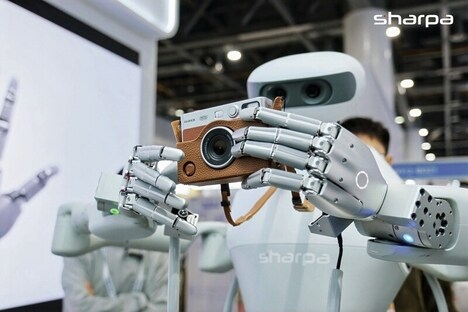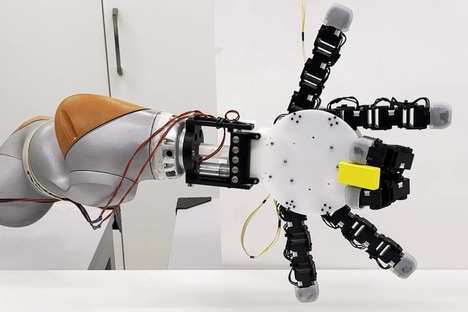

Human-trained robotic hands are advancing physical automation, with ROBOTERA introducing the XHAND 1 Pro-U, a five-finger robotic hand designed to reproduce complex movements demonstrated by humans. Developed to work with NVIDIA's GR00T 2 and DexUMI system, the device enables robots to acquire manipulation skills without requiring direct robotic operation during training.
Featuring 16 degrees of freedom, the hand supports flexible finger movements and varied gripping positions. DexUMI captures human hand motions and fingertip pressure, providing training data that helps robots perform physical tasks. Testing demonstrated success rates of 60% for preparing banana yogurt, 80% for scooping granola, and 75% for a fire chemistry exercise.
For robotics developers, this approach could simplify training processes and reduce reliance on additional robot-generated data. ROBOTERA's initial commercial release of 40 units also creates opportunities for research institutions and industry partners exploring practical robotic applications.
Image Credit: ROBOTERA
What Makes This Trend Stand Out
- Human-skill Transfer
- Robotic systems that learn from human motion and pressure data create new potential for automating dexterous tasks without extensive robot-specific programming.
- Dexterous Automation
- Five-finger robotic hands with high degrees of freedom expand the feasibility of robots handling irregular objects, delicate materials, and multi-step physical routines.
- Synthetic-to-physical Training
- Integration with AI training platforms enables physical robots to convert captured demonstrations into repeatable skills across food preparation, lab work, and industrial handling.
Sectors Adopting This
- Robotics
- Advanced manipulation hardware introduces differentiated opportunities for developers building general-purpose robots capable of more human-like task execution.
- Food Technology
- Human-trained robotic hands support emerging automation models for preparing, assembling, and portioning foods that require nuanced gripping and ingredient handling.
- Research and Development
- Early commercial access to dexterous robotic hands gives institutions a platform for testing practical applications in chemistry, healthcare, manufacturing, and embodied AI.