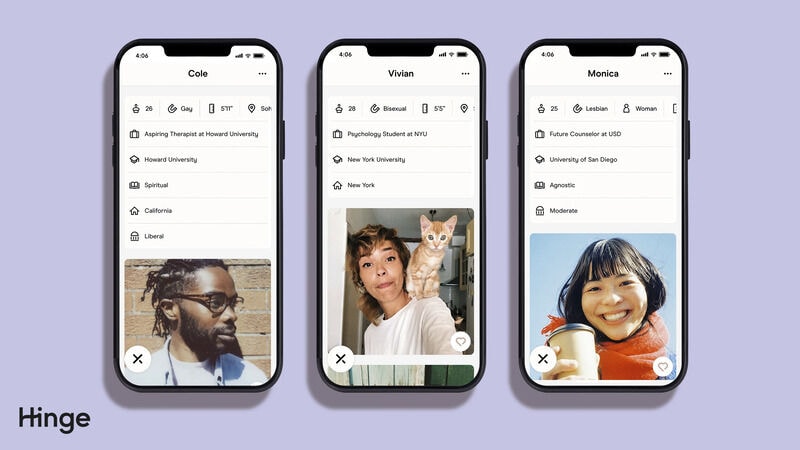
Dating app Hinge has launched a funding program to aid 2SLGBTQ+ and BIPOC communities in paying for aspiring therapists and counselors' education costs. The fund will support and uplift therapists who will then, in turn, shape their respective communities using “empathetic and holistic approaches.”
Hinge will be guided by the ‘Black Emotional and Mental Health Collective: BEAM’ and ‘Inclusive Therapists,’ two resources that will aid Hinge in reaching a larger audience that is passionate about the initiative. Hinge recognizes that people of color and 2SLGTBQ+ people are disproportionately affected by the lack of accessible therapy within their communities.
From May 18 to June 17, current U.S. college and graduate students in the mental health field can apply for the fund via Hinge’s dedicated website.
Image Credit: Hinge
Why This Trend Is Growing
- Diversity and Inclusion in Therapy
- With the support of companies like Hinge, funding programs are being launched that aim to support marginalized communities in the therapy and counseling field.
- Holistic Approaches to Therapy
- Funding programs that promote holistic and empathetic approaches to therapy are gaining traction, particularly in support of underrepresented communities.
- Increasing Accessibility to Therapy
- As therapy becomes more widely recognized as an essential form of healthcare, initiatives like Hinge's funding program are expanding access to education and training in therapy for underrepresented communities.
Industries Being Reshaped
- Online Dating
- Hinge's funding program is an example of how online dating apps can use their platforms to make positive social change beyond dating.
- Mental Health
- Funding programs that support diversity and inclusion in the mental health field have the potential to disrupt and diversify the industry.
- Education
- As funding programs like Hinge's launch, the education industry has the opportunity to offer more specialized programs that support marginalized communities in becoming therapists and counselors.