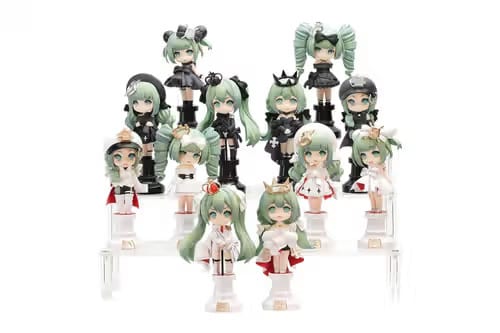
The Hatsune Miku Chess Series reimagines the virtual singer as each of the six chess piece types through a collection of plastic figures developed by Tianwen Kadokawa. The lineup includes king, queen, bishop, knight, rook, and pawn characters, each wearing a role-specific costume with matching accessories inspired by its corresponding chess piece. Every figure stands approximately 13 centimeters tall and includes a dedicated display stand. Black and white color variants allow the figures to represent opposing sides for chess-themed display or board play.
The knight wears an equestrian-inspired outfit with a horse emblem, while the queen features a crown and ceremonial cane reflecting the piece's traditional symbolism. Individual costumes and props distinguish the remaining four characters while maintaining a consistent visual style across the collection. Plastic construction positions the figures as accessible collectibles suitable for desktop or shelf display.
Image Credit: Tianwen Kadokawa, hypebeast
What Makes This Trend Stand Out
- Chess-themed Collectibles
- Board-game iconography is being translated into stylized merchandise, creating crossover appeal between tabletop culture, fandom display, and character-driven product design.
- Virtual Idol Merchandising
- Digital performers are expanding into physical collectible formats, signaling new value in turning intangible entertainment IP into tangible lifestyle goods.
- Display-ready Game Figures
- Hybrid products that function as both decorative figures and play-inspired objects are blurring the line between collectibles, toys, and interactive decor.
Sectors Adopting This
- Collectible Toys
- Character figure makers can differentiate mass-accessible products through themed variants, role-based costumes, and set-completion mechanics tied to familiar cultural systems.
- Tabletop Gaming
- Classic games gain renewed relevance when redesigned through pop-culture aesthetics, opening space for fandom-based editions and decorative play experiences.
- Anime Merchandise
- Anime and virtual idol licensing is evolving beyond apparel and standard figures into concept-led collections that connect fandom identity with home display culture.