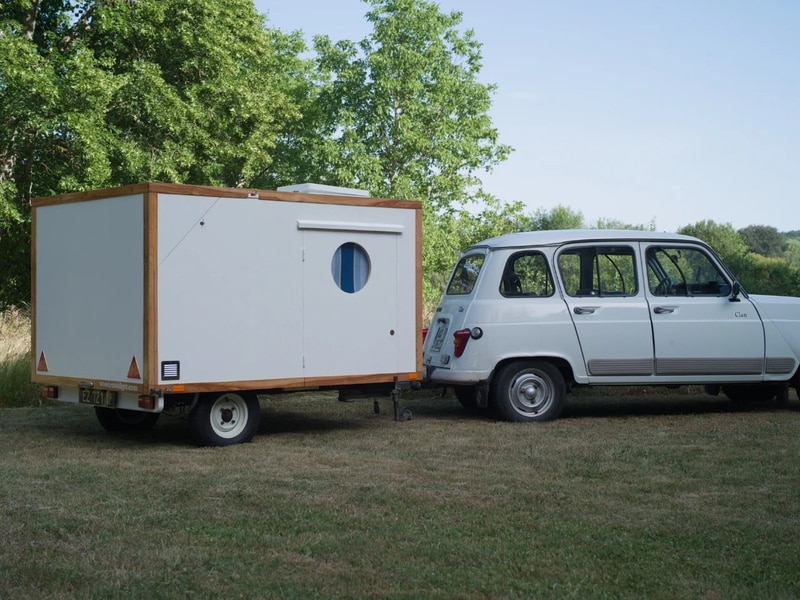
The Slidabox is a compact DIY camping trailer created by Robin Benjamin for Woodenwidget with a slide-out sleeping compartment that expands the interior after arrival. The trailer weighs less than 300 kilograms and uses insulated composite construction that combines structural support with reduced weight. A compact exterior minimizes aerodynamic drag while remaining compatible with small trailer platforms. The interior provides direct access to the galley, allowing occupants to prepare meals without leaving the cabin, while the slide-out section extends the sleeping area to approximately two meters in length.
The rear hatch creates standing space that can be enclosed with a curtain for changing or showering. A spacious galley incorporates a large work surface and storage within the trailer's compact footprint. Woodenwidget supplies illustrated construction plans instead of completed trailers, allowing builders to use metric or imperial materials on a compatible trailer chassis.
Image Credit: Robin Benjamin
Part of the cluster
Adventure Downsizing
Smaller recreational towables support longer, self-sufficient outdoor trips
Explore the cluster
Key Themes Behind This Trend
- Diy Micro-campers
- Home-build trailer plans create room for affordable personalization, lightweight materials experimentation, and community-driven product ecosystems around compact outdoor mobility.
- Expandable Living Modules
- Slide-out sleeping areas and convertible hatches point to space-saving architectures that can make small recreational vehicles feel more functional without increasing towing demands.
- Lightweight Composite Builds
- Insulated structural composites offer potential for lower fuel consumption, easier towing with smaller vehicles, and new modular construction methods for recreational equipment.
Where This Applies
- Recreational Vehicles
- Compact expandable trailers signal a shift toward accessible, low-weight camping products suited to urban consumers, smaller cars, and budget-conscious outdoor travelers.
- Outdoor Gear
- Integrated galleys, enclosed changing spaces, and DIY-friendly layouts expand the role of camping equipment into hybrid shelter systems with higher utility in minimal footprints.
- Maker Economy
- Illustrated build plans support distributed manufacturing models where customers become builders, creating demand for standardized components, kits, and digital design marketplaces.