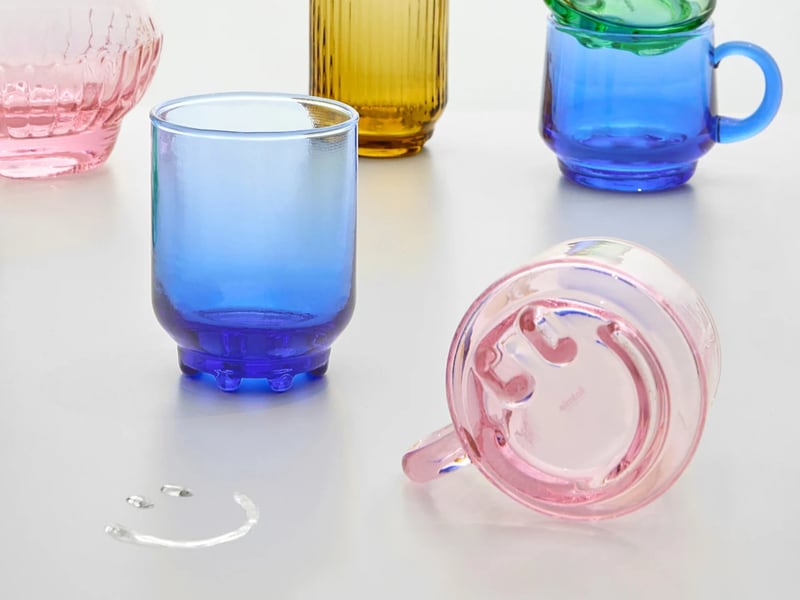
The GRINN collection is a handcrafted glassware collection designed by Mooque Sarunphon Boonto that uses condensation to create a smile-shaped water mark beneath each vessel. Mouth-blown from soda-lime glass, each piece features an engineered base that directs moisture into a curved pattern as condensation naturally forms around a cold drink. The collection applies traditional glassblowing techniques to a functional design that transforms an everyday physical process into a temporary visual effect.
The collection includes a Classic Glass, Highball Glass, Mug Glass, Beer Mug and Carafe, each using the same base geometry to produce the condensation pattern. The effect develops after a cold beverage with ice remains in the glass for 15 to 30 minutes, with smoother non-absorbent surfaces producing the clearest result. Natural variations and small bubbles remain part of the handcrafted manufacturing process, making every piece unique.
Image Credit: MOOQUE
What's Driving This Trend
- Condensation-activated Design
- Everyday material interactions become aesthetic features, creating opportunities for products that reveal temporary visuals through temperature, moisture, or use conditions.
- Functional Craft Glassware
- Handcrafted production gains added relevance when paired with engineered utility, opening space for premium home goods that combine artisanal variance with repeatable design effects.
- Ephemeral Tabletop Experiences
- Temporary sensory details in dining objects create new value around moments, encouraging collectible serveware that changes during use rather than remaining visually static.
Who This Affects Most
- Home Goods
- Decorative functionality in everyday objects points to differentiated product lines where routine household items deliver subtle experiential effects.
- Hospitality
- Restaurants, bars, and hotels can benefit from tabletop elements that enhance presentation and memorability without relying on digital technology or added service complexity.
- Glass Manufacturing
- Traditional mouth-blown methods paired with precise base engineering suggest new production niches for craft-led manufacturing with embedded performance-driven aesthetics.