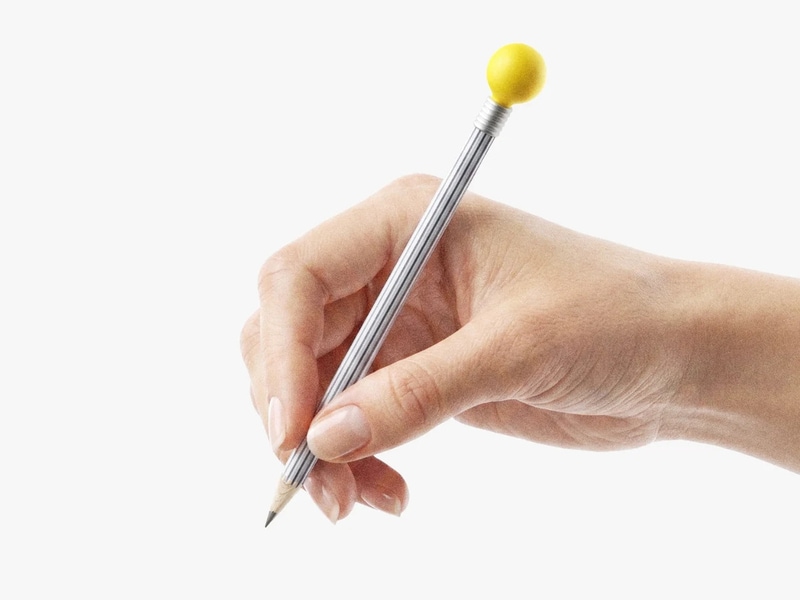
The IDEA Pencil is a conceptual writing instrument created by South Korean design studio QSEODESIGN that represents the creative process through its physical form. The pencil features a body shaped like an extruded gear to reference the iterative development of ideas, while a light bulb-shaped eraser represents the familiar symbol of an "aha" moment. The concept positions handwriting as an intentional alternative to digital workflows, presenting an everyday stationery object through a design-focused perspective.
The concept was developed by QSEODESIGN founder MinGyu Seo, whose work emphasises restrained forms and functional industrial design. The pencil is accompanied by minimal multifunctional packaging that extends the project's visual language beyond the writing tool itself. Rather than altering the function of a conventional pencil, the design applies symbolic details to familiar components while preserving everyday usability.
Image Credit: QSEODESIGN Studio
Key Themes Behind This Trend
- Symbolic Stationery
- Everyday writing tools with embedded visual metaphors create differentiation in saturated product categories by turning simple objects into expressions of creativity and identity.
- Analog Creativity Tools
- Handwriting-focused products gain renewed relevance as tactile alternatives to digital workflows, offering brands room to position analog rituals as premium creative experiences.
- Narrative Product Design
- Objects that communicate a concept through form and packaging expand emotional value without changing core functionality, opening space for design-led storytelling in utilitarian goods.
Where This Applies
- Stationery
- Traditional pencil and office supply makers can refresh familiar formats through conceptual aesthetics that appeal to design-conscious consumers and creative professionals.
- Industrial Design
- Studios specializing in restrained functional objects are positioned to elevate commodity products by layering symbolic meaning onto practical, mass-market forms.
- Packaging
- Minimal multifunctional packaging connected to a product’s visual language can extend brand storytelling while supporting more collectible and giftable consumer experiences.