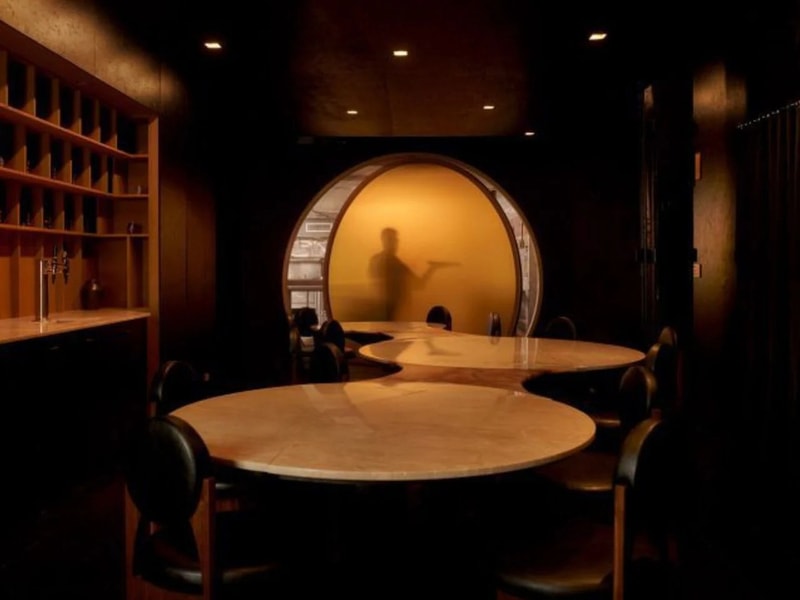
Gourmega is a Manhattan restaurant designed by Mariam Issoufou Architects using reclaimed and discarded materials typically removed from commercial interior projects. The space combines black lime-washed walls, black-stained cork flooring, walnut seating, and uneven textured finishes that preserve imperfections rather than conceal them. A translucent yellow pivot door separates the dining area from the kitchen, allowing silhouettes of chefs and movement from the workspace to remain partially visible throughout service. The restaurant interior was developed around a zero-waste approach that prioritizes reuse without reducing the atmosphere to purely industrial aesthetics.
A circular alabaster and travertine table anchors the center of the dining room and can be separated into seven smaller tables depending on service needs. The restaurant also incorporates exhibition space for rotating works by local African American artists, including bronze panels by Nifemi Marcus-Bello.
Image Credit: Mariam Issoufou
What Makes This Trend Stand Out
- Zero-waste Interior Design
- Reusing leftover commercial-fitout materials opens pathways to circular sourcing models that reduce procurement costs and extend product lifecycles.
- Adaptive Modular Furnishings
- Modular tables and reconfigurable seating suggest scalable service footprints that can optimize space utilization across variable seating demands.
- Imperfection-forward Aesthetics
- Celebrating material flaws creates demand for curated, low-tech finishing techniques and niche supply chains centered on reclaimed textures and patinas.
Sectors Adopting This
- Restaurant and Hospitality
- Restaurants integrating reclaimed-material interiors indicate potential for differentiated guest experiences tied to sustainable provenance and storytelling.
- Commercial Architecture
- Architectural practices emphasizing reuse point to new consulting models that value material recovery, demolition salvage, and lifecycle assessment services.
- Art and Cultural Programming
- Incorporating rotating local artwork within dining spaces highlights opportunities for cross-revenue partnerships between creatives and venue operators focused on immersive curation.