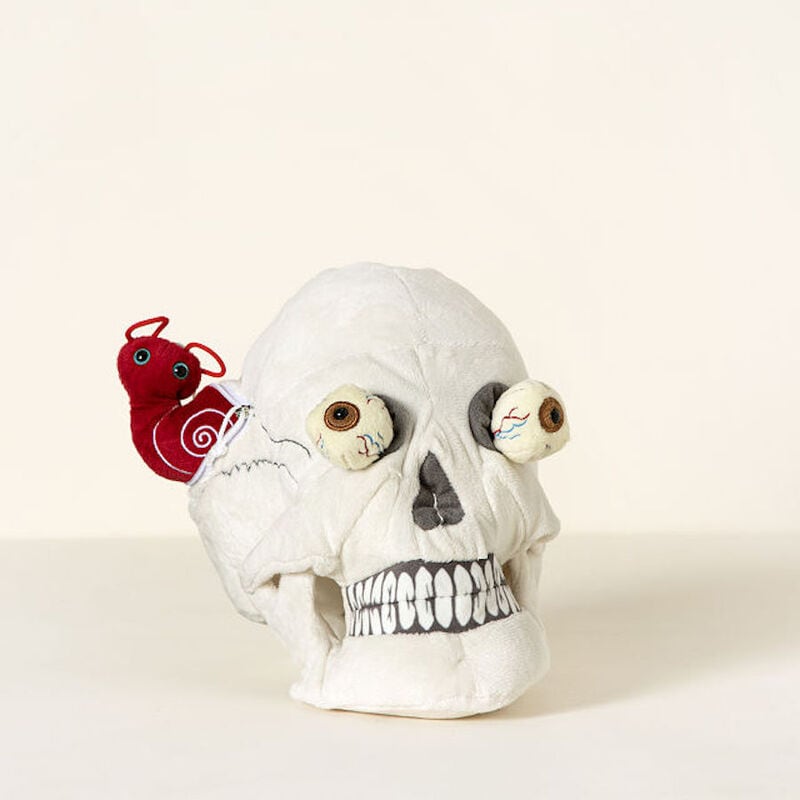
The 'Giant Skull with Hidden Organs' makes teaching the anatomy of the organs in the skull fun and entertaining. The skull contains many essential features, and learning about them when we are young helps us better understand ourselves and our bodies. The plush skull comes with a removable brain, hidden inner ear, hidden brain cell, and two removable pop-out eyeballs.
In addition, according to the description, each plush set comes with an educational “printed card with mind-fueling facts to teach—and fascinate” eager learners. It is made from polyester and a cotton blend, and it can only be hand washed. The hands-on learning tool is also a great display piece and talking point for curious minds.
Parents, guardians, and teachers can purchase the educational plush Giant Skull with Hidden Organs on the Uncommon Goods website.
Image Credit: Uncommon Goods
Key Themes Behind This Trend
- Educational Plush Toys
- There is an opportunity for creating more educational plush toys to teach children about different subjects, such as science, history, and literature.
- Interactive Learning Tools
- There is a market for interactive learning tools that allow children to learn through play and hands-on experiences.
- Multi-sensory Learning
- The use of toys to teach children through multi-sensory experiences can be expanded to other industries, such as healthcare and therapy.
Where This Applies
- Education
- Educational toys can revolutionize the way children learn and make education more engaging and enjoyable.
- Toy Manufacturing
- Manufacturers can create more educational toys that teach children about different subjects and incorporate interactive features to enrich learning experiences.
- Healthcare and Therapy
- Plush toys can be utilized in healthcare settings and therapy sessions to help patients better understand medical conditions and treatment options.