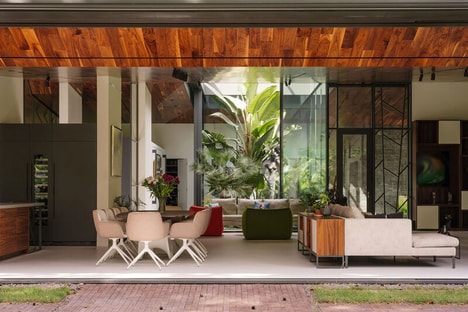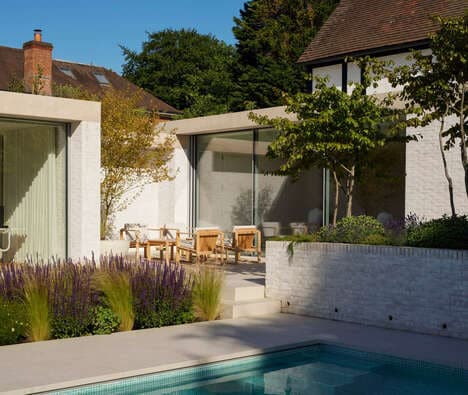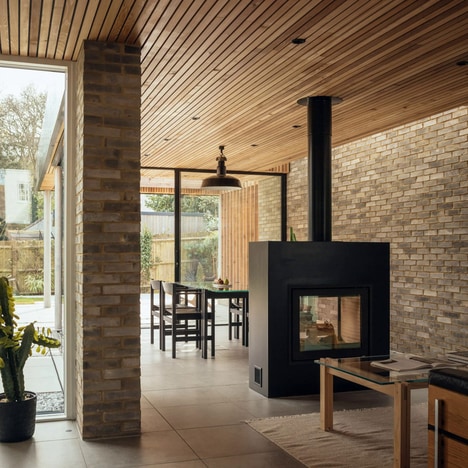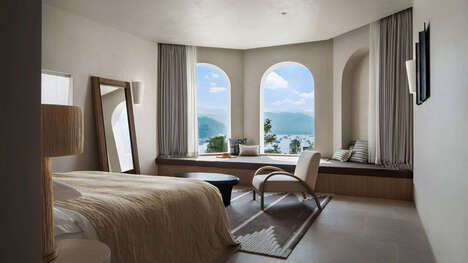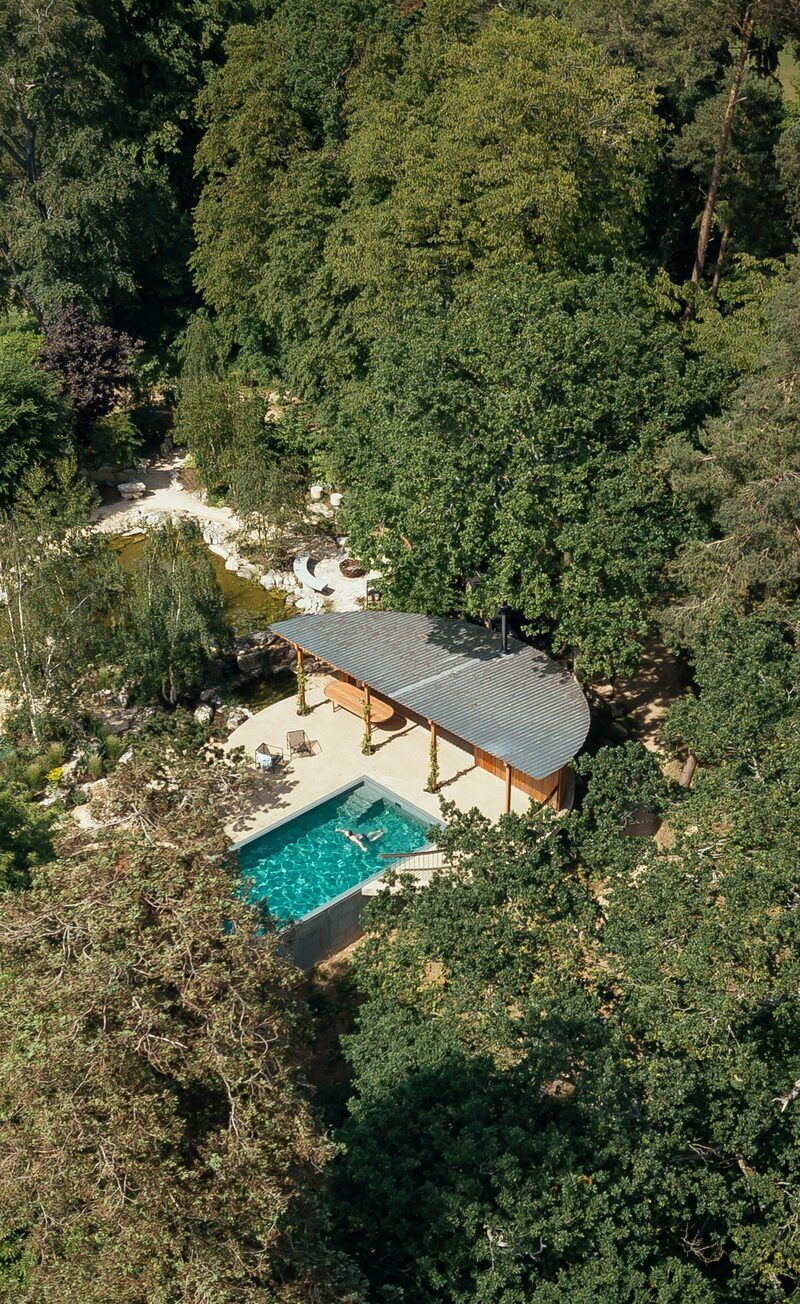
Architectural studio Surman Weston designs a Geometric Pool House located in the lush gardens of a home in the UK's Surrey area. It rises on top of a concrete plinth that overlooks the forests that surround the home. It is made by landscape designer Matthew Childs, who helps with finding a site in the gardens complete with seating and terraces.
The studio explains that "The client commissioned to project out of a wish to make greater use of the south-facing rear garden, and create new spaces for rest, exercise and socialising. A bold geometric insertion into nature, the pool house acts as a counterpoint to the setting, a combination of mature woodland and a landscaped garden featuring exposed Westmorland stone and organically shaped ponds."
Image Credit: Surman Weston
What Makes This Trend Stand Out
- Geometric Architecture
- The trend of using geometric shapes in architecture is disrupting traditional design methods and providing opportunities for innovative and unique structures.
- Integrated Landscaping
- The trend of incorporating landscaping into building design is disrupting traditional boundaries between indoor and outdoor spaces and providing opportunities for sustainable, natural living environments.
- Mixed-use Structures
- The trend of combining multiple functions in a single building is disrupting traditional zoning regulations and providing opportunities for efficient and versatile use of space.
Sectors Adopting This
- Architecture
- The architecture industry has the opportunity to embrace geometric designs and incorporate them into building structures.
- Landscaping
- The landscaping industry has the opportunity to work with architects to create integrated green spaces that enhance building designs and promote sustainability.
- Real Estate
- The real estate industry has the opportunity to invest in mixed-use structures that offer multiple functions and provide diverse living and working spaces.