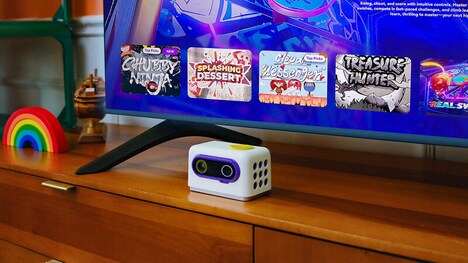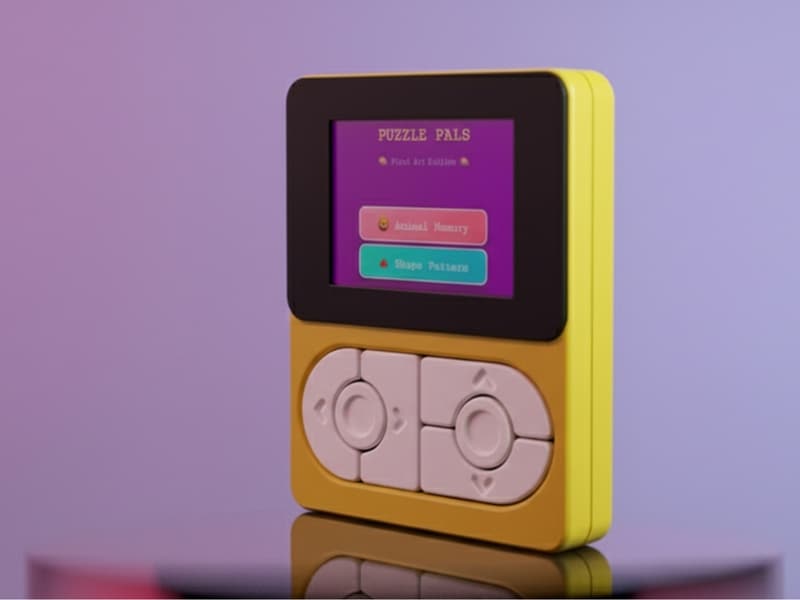
The Game Boy-inspired kids device concept is a handheld digital device designed to address ergonomic and behavioral issues associated with tablet use by children. The concept adopts a compact form with physical buttons positioned on either side of a central screen, encouraging tactile interaction instead of constant touch input. Its enclosed frame is shaped for smaller hands, offering improved grip and drop resistance compared to flat glass tablets. The layout supports longer use without the wrist strain often caused by wide touchscreens.
The device emphasizes intentional engagement through a simplified interface built around curated content rather than open app ecosystems. Physical controls are intended to support motor development while reducing accidental taps and screen fatigue. Battery life and heat management are considered as core design constraints to allow extended use without discomfort.
Image Credit: Royal Tyagi, Aarna Mishra
Key Themes Behind This Trend
- Tactile-centric Interaction
- A resurgence of physical buttons and haptic feedback in handhelds that prioritizes motor-skill development and reduces touch-fatigue opens possibilities for alternative input paradigms tailored to children.
- Ergonomic Child-safe Hardware
- Compact, drop-resistant designs shaped for smaller hands that address grip, heat, and wrist strain create room for novel materials and form factors focused on long-duration comfort.
- Curated Minimalist Content Ecosystems
- Simplified interfaces with tightly controlled content libraries that limit distractions suggest new models for subscription and licensing that balance engagement with developmental goals.
Where This Applies
- Educational Technology
- Adaptive learning platforms integrated with button-driven devices could enable assessment of fine motor progress and personalized curriculum delivery through non-touch inputs.
- Toy Manufacturing
- Reimagined play hardware combining durable materials and embedded electronics indicates opportunities for hybrid toys that blend physicality with digital content in safer formats.
- Wearable Health Technology
- Sensors and thermal management approaches used to monitor device heat and usage patterns point toward cross-over products that track ergonomics, screen exposure, and pediatric well-being.