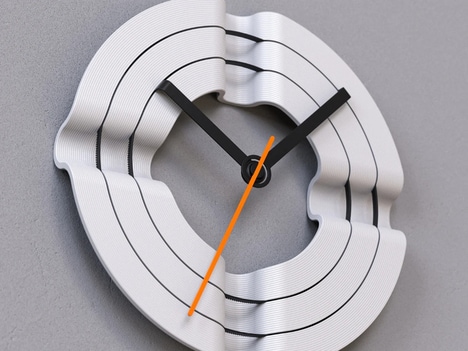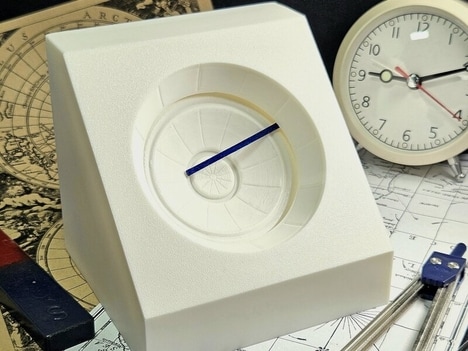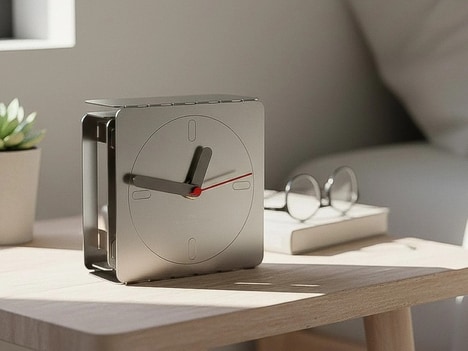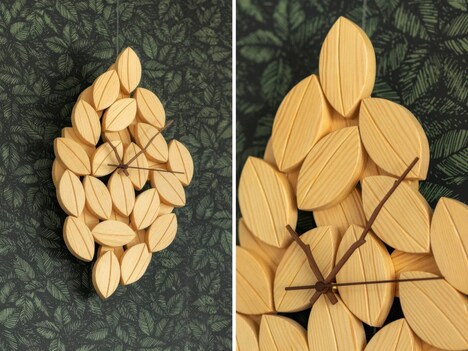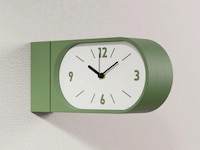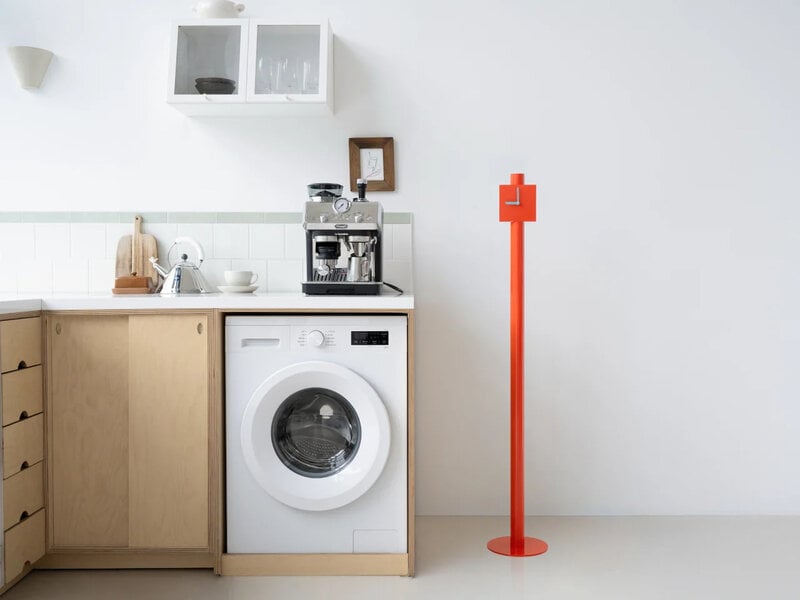
Jaewon Yeo built ‘PEEL CLOCK’ from a cut section of metal tube turned into a flat square dial, creating a freestanding clock that uses floor space instead of a wall or tabletop. That layout suits living rooms and kitchens where coffee tables, counters and backsplashes are already busy, because the clock stands on its own circular base.
The dial omits numerals and hour marks, leaving two contrasting hands to carry the readout. A small movement stays visible behind the face, and the orange version adds pale blue hands so the focal point stays easy to find.
Jaewon Yeo shows how floor-standing placement can widen where a home clock works, especially in rooms where drilling or surface clutter is a constraint, while the peeled tube-to-square form moves minimalist timepieces closer to accent furniture, since the same object covers timekeeping and part of a room’s color statement.
Image Credit: Jaewon Yeo
What Makes This Trend Stand Out
- Floor-standing Timepieces
- Freestanding clocks create opportunities for timekeeping products that serve renters, compact homes, and design-conscious spaces without relying on walls or tabletops.
- Functional Accent Objects
- Hybrid decor that combines utility with visual impact points to new product categories where everyday devices double as sculptural room statements.
- Minimalist Visible Mechanics
- Exposed movements and reduced dials support premium design differentiation by making simple mechanical details part of the aesthetic experience.
Sectors Adopting This
- Home Decor
- Furniture-adjacent accessories can expand decor offerings by blending practical functions with bold forms, colors, and placement flexibility.
- Consumer Electronics
- Analog devices with distinctive physical presence highlight room for electronics brands to compete through material design rather than added digital complexity.
- Interior Design
- Space-saving decorative objects introduce fresh specification options for rooms where wall mounting, surface clutter, or visual balance creates design constraints.