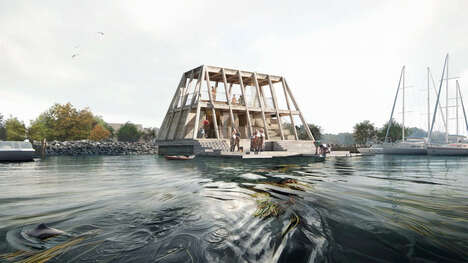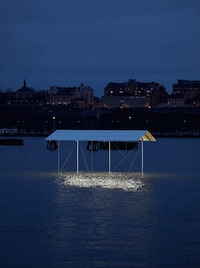
A group of students from the Estonian Academy of Arts came together to design a floating pavilion for the waterway in the Soomaa forests. Mentored by professional architects and designers, the team was tasked to create an environment that responded to its context and the more basic needs of its users.
The triangular shelter protects occupants from the elements, an integrate fire pit enables them to cook and keep warm, while a sauna component was originally included to provide comfort on the coldest of days. The complete structure is perfectly crafted from timber planks in a characteristically Scandinavian style. The floating pavilion is open to the public as a natural installation, welcoming visitors to approach it by canoe or kayak from its flanking wooden docks.
Key Themes Behind This Trend
- Sustainable Floating Architecture
- The use of sustainable architecture in the design of floating structures can offer innovative solutions to waterway communities.
- Contextual Responsive Architecture
- Incorporating contextual responsiveness into architecture can improve its functionality and usefulness to communities.
- Waterway Tourism
- Developing tourism opportunities around waterways can foster economic growth and attract visitors looking for unique experiences.
Where This Applies
- Construction Industry
- The construction industry can adopt more sustainable practices and materials for designing and building floating structures in waterways.
- Tourism Industry
- The tourism industry can explore waterway destinations and develop infrastructure and experiences for visitors, such as floating pavilions, to attract and retain tourists.
- Environmental Conservation Industry
- The environmental conservation industry can partner with designers and architects to create structures that are in harmony with the surrounding ecosystem, while also providing innovative solutions for communities and visitors alike.