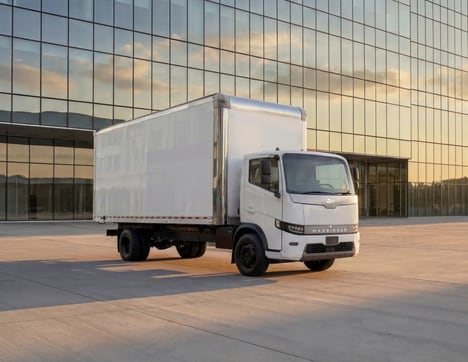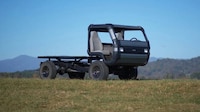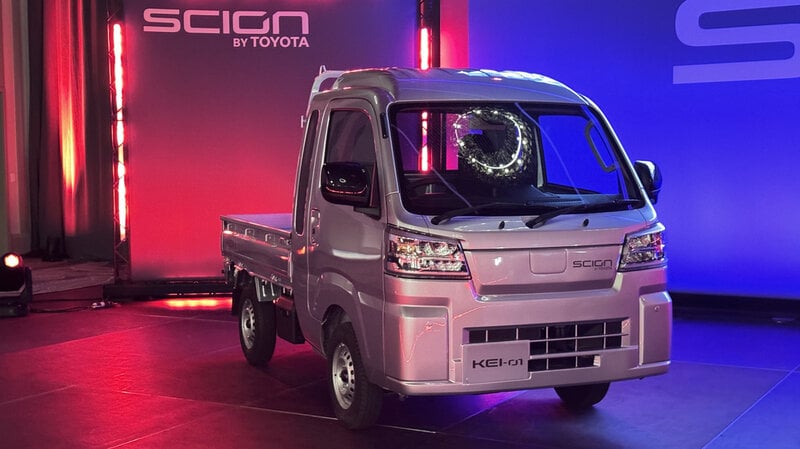
Toyota is bringing kei trucks to the United States under the revived Scion name with the ‘KEI-01,’ a right-hand-drive work truck planned for the second half of 2027. Built for fleet buyers serving small businesses, ranches and other tight-space operations, it turns the compact Japanese format into a legal low-speed option for local hauling.
A 25 mph limit keeps it in the low-speed vehicle class, while a 600-pound bed rating covers tools, small gear and short-haul jobs. Selectable four-wheel drive helps it handle uneven ground. Three-way cargo walls drop for easier access, and the extended cab adds sliding, reclining seats.
Toyota shows how fleet-only sales through participating Scion by Toyota dealers can make the KEI-01 a procurement play for businesses that need compact utility without a retail purchase path, while building it in Indiana ties a niche vehicle format to Toyota’s U.S. manufacturing base.
Image Credit: Logan K. Carter / Jalopnik
Why This Trend Is Growing
- Fleet-only Microtrucks
- Compact commercial vehicles tailored to procurement channels create space for purpose-built mobility products that bypass consumer retail models.
- Low-speed Utility Vehicles
- Regulatory speed limits are enabling new vehicle categories for campuses, farms, resorts and dense local logistics where full-size trucks are inefficient.
- Localized Kei Adaptation
- Japanese kei-inspired formats adapted for U.S. manufacturing and compliance point to niche vehicle platforms designed around tight-space productivity.
Industries Being Reshaped
- Commercial Fleets
- Fleet operators gain access to smaller specialized vehicles that can reduce operating costs for short-range hauling and site-based transportation.
- Automotive Manufacturing
- Domestic production of niche compact trucks signals an opportunity for automakers to diversify beyond mass-market vehicles with targeted work platforms.
- Agriculture and Ranching
- Small farms and ranches benefit from lightweight utility vehicles suited to uneven terrain, limited pathways and frequent low-load transport tasks.