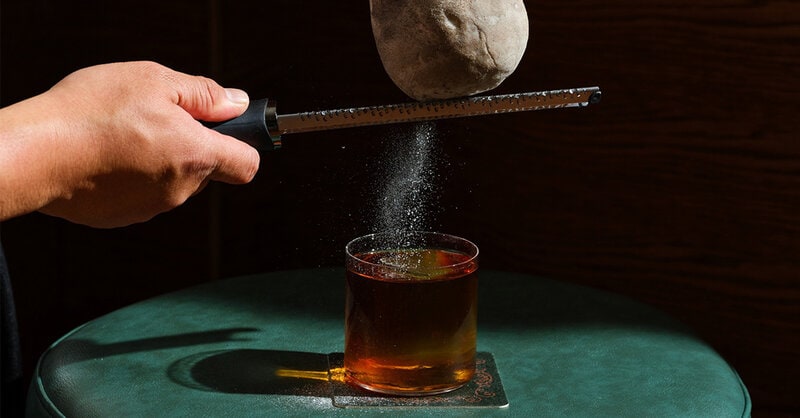
June Baby in New York City's East Village finishes its Taste and See with shavings of Asín tibuók, letting bar guests get a smoky scent and a quick saline edge on the first sip. The Filipino-American cocktail bar folds the salt into an Old Fashioned riff built with brown butter-washed bourbon and date syrup.
Made on Bohol Island, Asín tibuók comes from seawater and coconut husks through a process that takes four months and dates back to at least the 1600s. That long method has made the salt scarce, so replacing June Baby's piece in the U.S. is not simple.
Using Asín tibuók in an East Village bar turns a garnish into a marker for Filipino guests who recognize it, while giving other drinkers a entry point into the menu's cultural references. The hard-to-source salt also makes heritage part of the serve instead of something left to décor alone.
Image Credit: June Baby
Key Themes Behind This Trend
- Heritage Garnish Storytelling
- Culturally specific finishing ingredients are transforming cocktails into sensory narratives that connect guests to provenance, memory, and identity.
- Scarce Ingredient Signatures
- Limited-supply heritage inputs create differentiation for premium bars by making rarity and sourcing complexity part of the guest experience.
- Filipino Cocktail Innovation
- Filipino flavors and traditions are gaining visibility in craft beverage menus through modern riffs that blend diasporic identity with familiar cocktail formats.
Where This Applies
- Craft Cocktail Bars
- High-end beverage venues can use rare regional ingredients to deepen menu storytelling and establish distinct, culturally resonant signatures.
- Specialty Food Importing
- Growing demand for artisanal heritage products opens space for curated supply chains that preserve traditional production while serving premium hospitality markets.
- Cultural Hospitality
- Restaurants and bars centered on diaspora communities are reframing authenticity through immersive ingredients rather than relying only on décor or naming conventions.