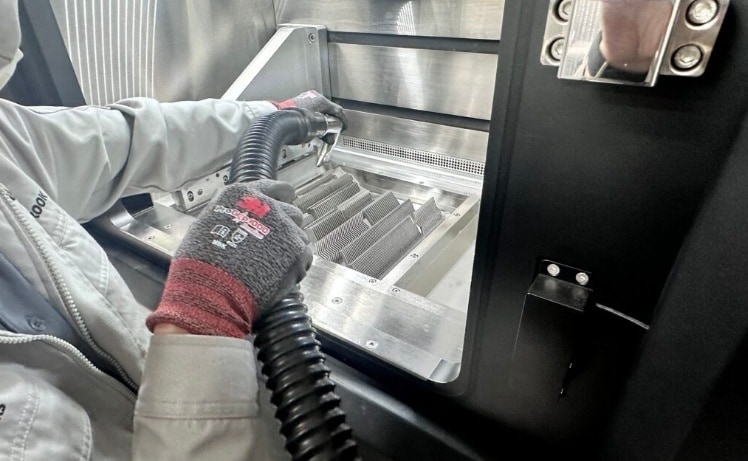
Hankook Precision Works introduced a production 3D printing capability using Eplus3D’s EP-M300 metal printer, deploying the system to make mold components for tire sipes, featuring dual-laser metal additive manufacturing for faster, more complex tooling. The rollout began with a first machine in September 2025 and expanded with a second unit in February 2026 as the partners moved the printer from pilot to factory floor.
Eplus3D supported Hankook with on-site training, process parameter development and part testing to industrialize production of sipe mold inserts. The EP-M300 offers a 300x300x450mm build volume, smart production monitoring, reduced gas consumption and longer filter life, which aided implementation in a high-throughput tire-mold context.
For tire makers and fleets, 3D-printed mold inserts enable quicker iteration of tread and sipe geometries for use-specific outcomes such as improved grip, lower noise or EV load optimization. The shift illustrates how metal additive tooling is unlocking bespoke tire designs and shorter time-to-market for specialty rubber parts.
Image Credit: Eplus3D
Key Themes Behind This Trend
- On-demand Metal Tooling
- A shift toward on-site production of mold inserts enables rapid customization of sipe geometries to support varied performance requirements across small production runs.
- Dual-laser Additive Manufacturing
- Simultaneous multi-laser metal printing increases throughput and geometric complexity for tooling components, enabling intricate cooling channels and lightweight lattice structures in mold parts.
- Bespoke Tread Iteration
- Faster iteration cycles for tread and sipe designs allow bespoke rubber profiles tuned for specific noise, grip, and EV-load characteristics within compressed development timelines.
Where This Applies
- Tire Manufacturing
- Integration of factory-floor metal additive systems transforms tooling workflows, reducing lead times for specialty and seasonal tire designs.
- Automotive Original Equipment Manufacturers
- OEMs see opportunities to optimize tire–vehicle integration through closer co-development of load-optimized treads and EV-specific durability profiles.
- Fleet and Mobility Services
- Fleets and mobility operators could benefit from tailored tire solutions that balance rolling resistance, lifespan, and cabin noise based on duty cycles and vehicle electrification levels.