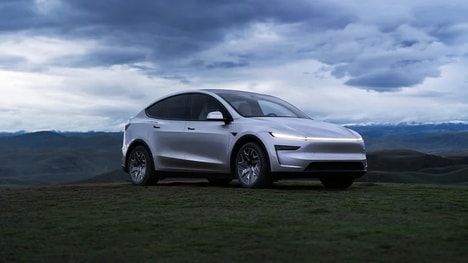

Tesla extended the driving range of the ‘Model Y Rear-Wheel Drive’ without raising its sticker price, giving entry-level crossover buyers in the U.S. more miles between charges. Tesla’s U.S. website lists the trim at an estimated 348 miles of range, up 27 miles, while the starting price remains $41,630.
With the standard 18-inch wheels, the added distance brings the base version within seven miles of the costlier Premium trim. The change appears on Tesla’s U.S. website, while federal range paperwork still shows the earlier estimate. That leaves drivers choosing between trims with less reason to pay mainly for extra reach.
Tesla shows how keeping the price flat at $41,630 while moving the cheapest Model Y closer to the Premium version can make range a tougher justification for trading up.
Image Credit: AI-generated
What's Driving This Trend
- Range-enhanced Entry Evs
- Automakers narrowing the performance gap between base and premium electric models create new pressure on trim-based pricing strategies.
- Flat-price Feature Gains
- Price stability paired with meaningful capability upgrades reshapes consumer expectations around value in competitive vehicle categories.
- Trim Cannibalization Pressure
- Entry-level models with near-premium specifications expose opportunities for simplified lineups and software-defined differentiation.
Who This Affects Most
- Electric Vehicles
- Mass-market EV competition increasingly centers on range-per-dollar improvements that influence buyer migration across model tiers.
- Automotive Retail
- Dealers and direct-sales platforms face shifting upsell dynamics when lower-cost configurations absorb formerly premium purchase drivers.
- Battery Technology
- Incremental efficiency gains in battery systems support longer range without sticker-price increases, strengthening affordability narratives.