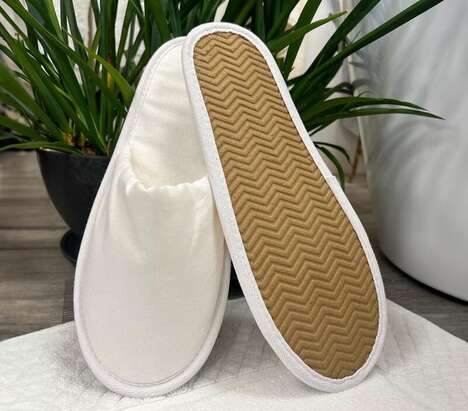
The Done & Dusted project by Rahat Rai reimagines domestic waste as material by turning vacuum cleaner dust into a felted textile used to craft soft slippers. The process begins with collecting household dust, which is then heated, filtered, and mechanically compressed using felting methods. Once cleaned and bound, the material is reinforced with stitched grid lines and finished with latex edging. The result is a pair of slippers—objects typically meant to keep feet clean—made from the very substance they protect against.
Done & Dusted raises broader questions about material reuse and how even invisible waste can take on aesthetic and practical form. Rai envisions the concept evolving beyond footwear, potentially serving applications in interiors and packaging. The project reflects personal lifestyle through its source material and challenges assumptions about value, beauty, and disposability in modern design.
Image Credit: Rahat Rai
Key Themes Behind This Trend
- Circular Material Innovation
- Creating textiles from household dust showcases innovative approaches to circular economy principles, emphasizing material reuse and sustainability in product design.
- Waste Transformation Aesthetics
- Transforming invisible household waste into visually appealing products highlights how perceived waste can be a source of both beauty and utility in modern design.
- Multi-functional Materials
- Developing textiles that can transition from footwear to interior applications suggests a future where materials can easily adapt to various uses, reducing overall resource consumption.
Where This Applies
- Sustainable Fashion
- Incorporating unconventional materials like vacuum dust in fashion items presents challenges and opportunities for the industry to innovate with environmentally friendly alternatives.
- Home Goods Manufacturing
- The adaptability of dust-based textiles to interior applications opens pathways for eco-conscious and aesthetically unique home decor products.
- Eco-friendly Packaging
- Reimagining dust as a potential material for packaging redefines waste utility, allowing the industry to explore more sustainable and biodegradable packaging solutions.