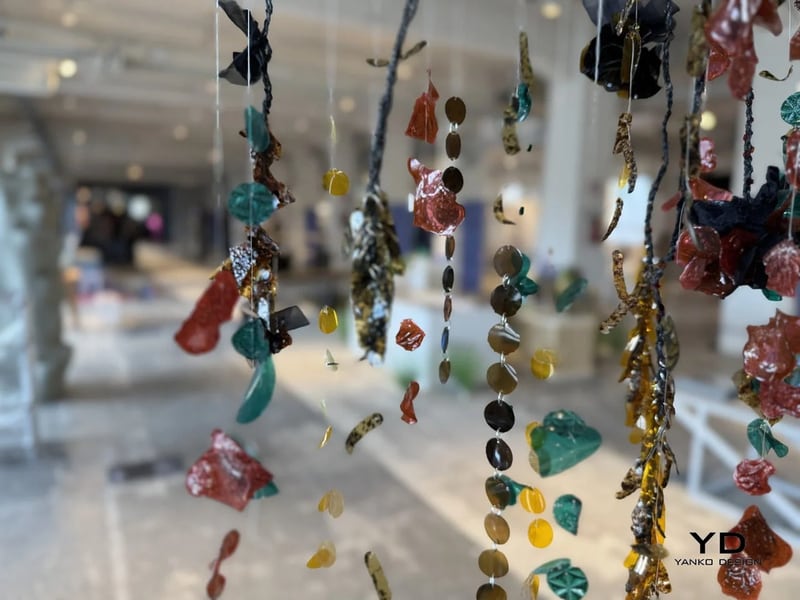
Detox Bio-Embellishments sequins are a material experiment by CQ Studio that transforms textile dye wastewater into wearable embellishments. Developed by designer Cassie Quinn, the process captures pollutants from dye sludge using a system that incorporates food waste, separating contaminants from water before repurposing the residue into thin, flexible sheets. These sheets are then die-cut into sequins, creating a bio-based alternative to conventional plastic embellishments used in fashion.
The material is designed to handle both synthetic and natural dye waste streams, preventing harmful chemicals from entering waterways while enabling safer organic matter to be composted. The resulting sequins retain a high-shine finish, appearing in tones such as deep black, amber, teal, and red, with some pieces forming tortoiseshell-like patterns. Presented at Milan Design Week as part of the Transient Gradients exhibition, the pieces were displayed as cascading installations.
Image Credit: CQ Studio, Yanko Design
What Makes This Trend Stand Out
- Waste-to-embellishment Materials
- Material processes that convert dye sludge into high-shine, compostable embellishments promise alternatives to petrochemical sequins, enabling closed-loop adornments.
- Circular Dye Remediation
- Systems that capture and separate contaminants from textile wastewater using organic inputs shift dye remediation from treatment to resource generation rather than mere disposal.
- Bio-based Textile Aesthetics
- Aesthetic interest in bio-derived finishes drives demand for visually rich, sustainable ornamentation featuring unique tortoiseshell-like patterns and deep, natural tones.
Sectors Adopting This
- Fashion Accessories Manufacturing
- Accessory makers stand to replace conventional plastic trims with durable, glossy bio-based sequins that align with sustainable luxury positioning.
- Textile Dyeing and Processing
- Dyehouses incorporating pollutant-capture and residue-refinement could convert harmful effluents into sellable material inputs while lowering regulatory and treatment burdens.
- Environmental Waste Management
- Waste management firms can evolve into resource recovery providers that transform dye sludge into purified sheets and marketable raw materials for design sectors.