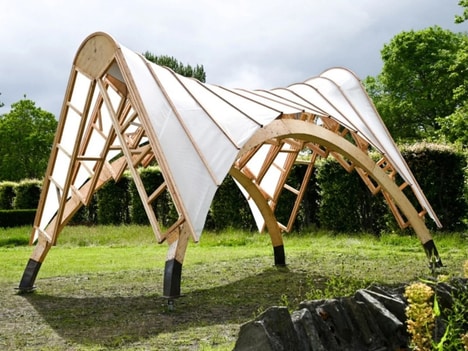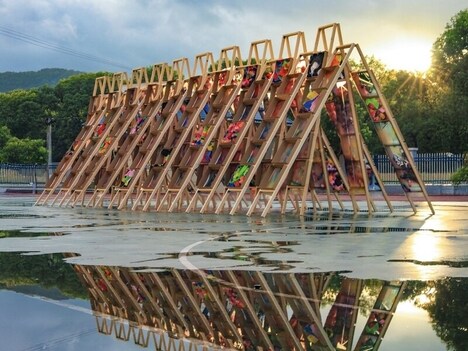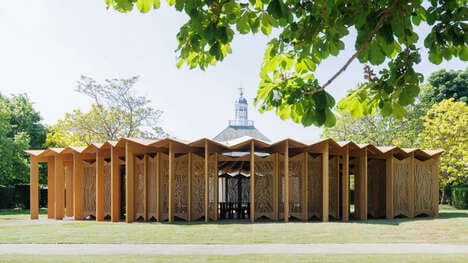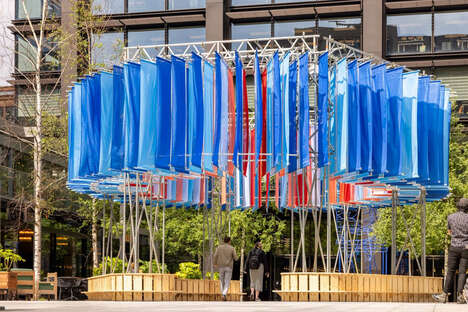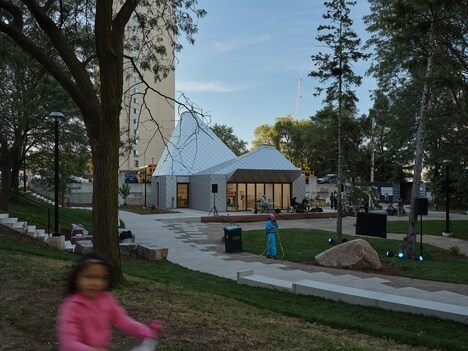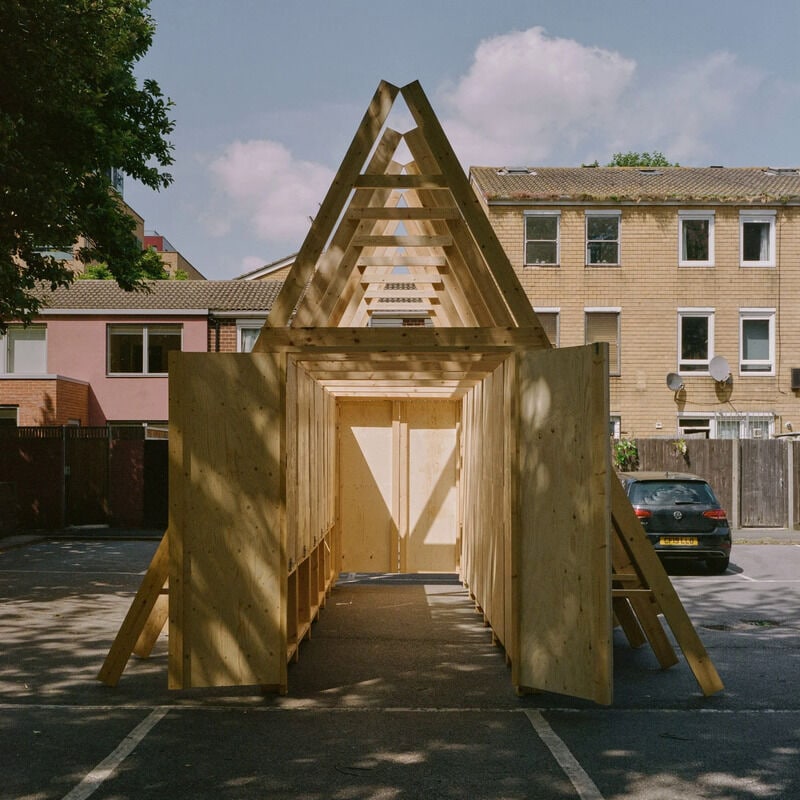
The London School of Architecture created the Dalston Pavilion in London using timber materials and this is a part of the London Festival of Architecture. The pavilion is located in a car park next to the Hackney campus and it is meant to operate as an outdoor exhibition space and classroom. This is a space to host event programs all month long -- all of which are designed for the local youth community.
Head of school, Neal Shasore notes "The Dalston Pavilion is a beacon of our Part 0 campaign, which has thus far delivered three access and outreach programmes, and helped us to build relationships with more than a dozen local schools. This year, the young people who participated in our programmes sought to reimagine the car park site adjacent to the school through design, craft and ecology. The pavilion tells their stories and showcases their work for the wider neighbourhood to see and discuss."
Image Credit: Rikard Svalastoga Kahn
Key Themes Behind This Trend
- Eco-friendly Architecture
- The integration of timber in constructing the Dalston Pavilion highlights a sustainable approach in urban architecture.
- Community-centric Design
- Designing spaces like the Dalston Pavilion to serve as educational and exhibition areas fosters community engagement and youth involvement.
- Adaptive Reuse of Urban Spaces
- Transforming car parks into functional public structures, as seen with the Dalston Pavilion, repurposes underutilized urban areas innovatively.
Where This Applies
- Architecture
- Architects are exploring eco-conscious materials and adaptive reuses of urban spaces evidenced by initiatives such as the Dalston Pavilion.
- Education
- Educational institutions can leverage design and architecture to create multifunctional spaces that enrich student learning and community interaction.
- Event Planning
- Events hosted in reimagined spaces like the Dalston Pavilion demonstrate creative uses of unconventional venues within the urban environment.