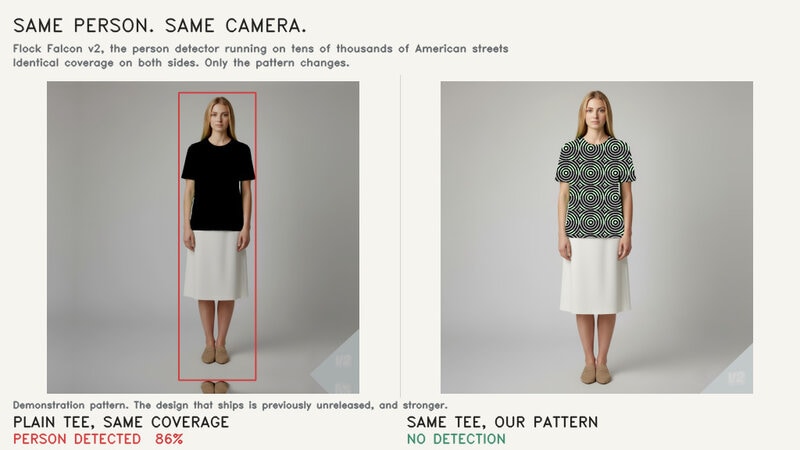
Bill Swearingen introduced noRecognition, a project that generates computer-designed adversarial patterns intended to prevent some surveillance and license plate detection systems from identifying people, faces and vehicles. The system uses reinforcement learning to iteratively create new patterns, with Swearingen reporting roughly 31 million tests during development.
The project was tested against 11 open-source detection algorithms, including software associated with systems used by Flock, Axon and Clearview AI. At Def Con, Swearingen demonstrated one pattern applied to a 2009 Toyota Yaris that successfully avoided detection by a Flock camera. The patterns are being developed for clothing, merchandise and potential vehicle skins, while the strongest versions are being kept offline.
For consumers, noRecognition offers a physical approach to reducing automated detection without blocking cameras from recording footage. The project reflects growing interest in adversarial privacy tools designed to interfere with algorithmic surveillance.
Image Credit: noRecognition
What's Driving This Trend
- Adversarial Fashion
- Computer-generated patterns embedded into apparel create new privacy-focused product categories that complicate automated facial and pedestrian recognition.
- Algorithmic Camouflage
- Reinforcement learning enables physical designs that exploit machine vision weaknesses, opening space for consumer goods built around detection avoidance.
- Surveillance-resistant Mobility
- Vehicle skins and merchandise designed to evade recognition systems signal emerging demand for everyday objects that reduce machine-readable identity traces.
Who This Affects Most
- Privacy Technology
- Physical adversarial tools expand the sector beyond software protections by addressing surveillance risks in public spaces.
- Apparel and Accessories
- Clothing and merchandise brands can differentiate through pattern design that blends aesthetics with automated detection interference.
- Automotive Aftermarket
- Custom wraps and vehicle skins gain new relevance as machine vision avoidance becomes a privacy feature for mobility products.