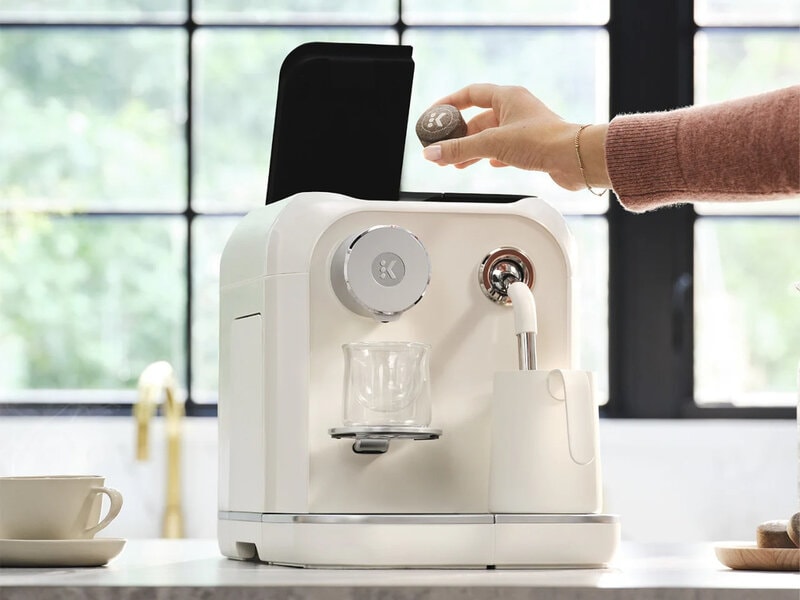
Keurig is trying to keep single-serve convenience while ditching the plastic shell left behind by each cup. The 'Alta' brews with a pressed coffee puck called an 'AltaRound,' and the countertop machine also makes espresso and frothy milk drinks in one unit.
AltaRounds use a plant-based coating partly derived from seaweed, so you can compost the spent coffee instead of adding it to the pod pile. A printed code tells the brewer what drink is inside, while the espresso setting can reach up to 10 bars of pressure. That gives the machine a more guided, less fussy feel than a typical pod brewer.
For shoppers, this means the pod coffee maker ritual can feel cleaner without giving up a latte-friendly setup. It also hints that sustainability in this category now has to cover the whole system, not just the drink itself.
Image Credit: Yanko Design - Modern Industrial Design News
What's Driving This Trend
- Compostable Pod Alternatives
- Plant-based coffee formats are reshaping single-serve systems by reducing plastic waste while preserving the convenience that made pods mainstream.
- Seaweed-based Packaging
- Marine-derived coatings introduce new material pathways for food-safe packaging that can biodegrade more readily than conventional petroleum-based barriers.
- Coded Beverage Automation
- Printed identifiers on consumables enable machines to tailor brewing parameters, creating more consistent premium drinks with minimal user effort.
Who This Affects Most
- Coffee Appliances
- Integrated brewers that handle coffee, espresso, and milk drinks signal growth potential for compact machines combining sustainability with café-style functionality.
- Sustainable Packaging
- Compostable coatings for wet or aromatic products expand opportunities for barrier materials that meet both performance and end-of-life expectations.
- Foodservice Technology
- Smart consumable recognition systems support a shift toward guided preparation platforms that simplify complex beverage experiences for homes and small venues.