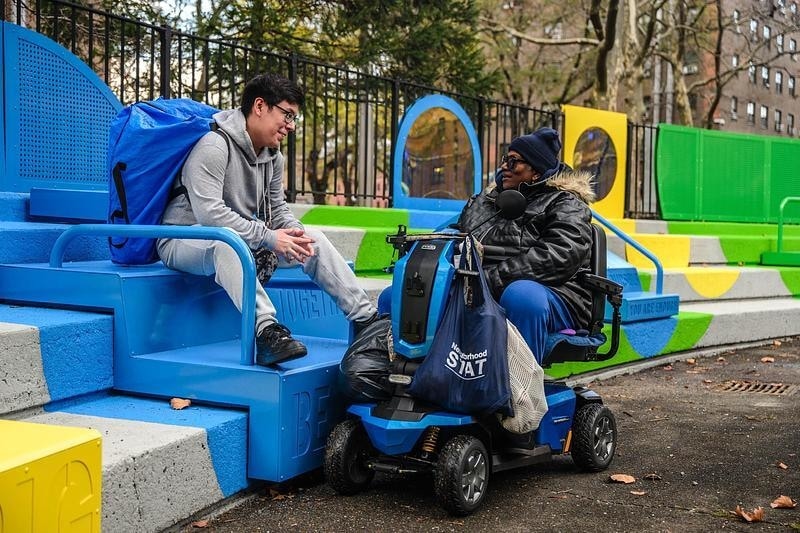
The Common Corner project is a collaborative redesign initiative that transformed an unused concrete seating structure within a public housing development in New York City into a multifunctional community space. The multidisciplinary design studio The Urban Conga designed the Common Corner in collaboration with the Morris House residents, New York City Housing Authority, The Public Housing Community Fund, the Center for Justice Innovation, and The Jeffrey H. and Shari L. Aronson Family Foundation.
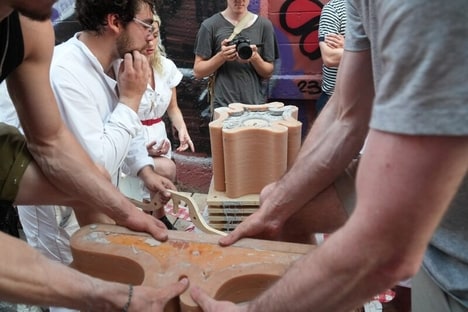
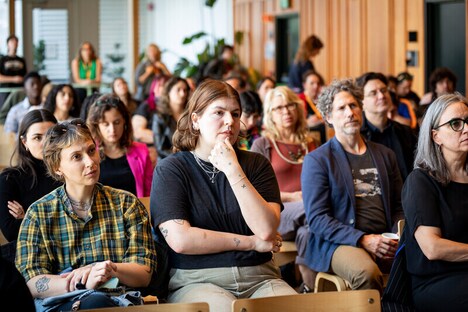
The process was fundamentally guided by participatory design principles, as The Urban Conga held organized workshops and interactive methods to actively solicit and incorporate input from the residents throughout all phases, from initial conceptualization to final implementation.
The Common Corner is organized into distinct but connected areas intended to facilitate various forms of engagement — one zone focuses on accessible seating for social interaction, another incorporates physical elements for climbing and balancing to encourage active recreation, and a third features a platform suitable for performances, gatherings, or quiet reflection.
Image Credit: Brook Banister
Key Themes Behind This Trend
- Participatory Design Practices
- Participatory design methods are emerging as a significant trend, fostering community engagement by incorporating local feedback in urban redevelopment projects.
- Multifunctional Urban Spaces
- Transforming singular-purpose areas into multifunctional urban spaces reflects a growing trend to maximize utility and community engagement in city landscapes.
- Public Housing Innovations
- Innovations in public housing are trending towards inclusive designs that support diverse activities and foster community collaboration and interaction.
Where This Applies
- Urban Design Industry
- The urban design industry stands poised for disruption through collaborative and inclusive design processes that create multifunctional and engaging public spaces.
- Community Development Sector
- Community development initiatives are increasingly focusing on participatory processes that empower residents to play an active role in shaping their living environments.
- Public Infrastructure Planning
- Public infrastructure planning is shifting towards designs that prioritize versatility and community-centric features in urban revitalization efforts.