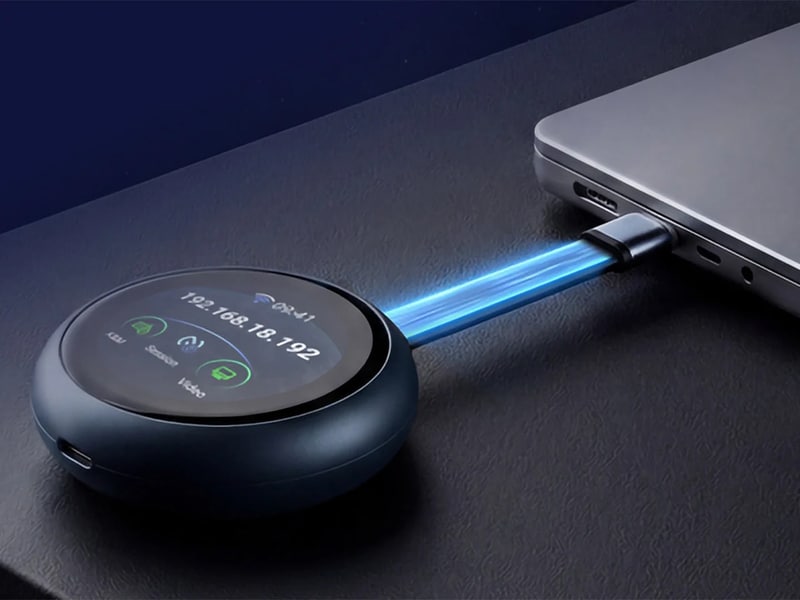
The GL.iNet Comet Q is a browser-based remote control device that provides hardware-level access to USB-C devices including laptops, phones, tablets and Mac minis. A single USB-C connection carries video, data and power, eliminating the need for separate HDMI and USB cables. The device supports video output up to 2K at 60 fps with two-way audio and includes a USB-C passthrough port to keep connected devices charged during use.
The Comet Q works independently of software installed on the target device, allowing remote control while the device remains powered on, even if the screen is locked. It supports USB-C iPhones, iPads and Android devices with DisplayPort Alt Mode, enabling cross-platform control between different operating systems. Users can access devices through a web browser or the GLKVM app, while security features include support for Tailscale, ZeroTier, WireGuard VPN and two-factor authentication.
Image Credit: GL.iNet
Key Themes Behind This Trend
- Browser-based Remote Control
- Hardware-level access through standard web browsers reduces dependence on installed software and creates new potential for lightweight device management across distributed teams.
- Single-cable Workflows
- The consolidation of video, data and power into one USB-C connection signals a shift toward simpler peripheral ecosystems with fewer setup barriers for hybrid work environments.
- Cross-platform Device Access
- Remote control across laptops, phones, tablets and mini desktops expands the value of mixed-device fleets by making operating system differences less restrictive.
Where This Applies
- Remote Work Technology
- Browser-accessible device control strengthens remote troubleshooting, secure administration and flexible workstation access for organizations managing decentralized employees.
- Consumer Electronics
- USB-C remote interfaces introduce new product possibilities around compact accessories that extend the usability of phones, tablets and small computers.
- Cybersecurity
- Integrated VPN support and two-factor authentication position hardware remote access as a more secure alternative for managing sensitive endpoints beyond traditional software tools.