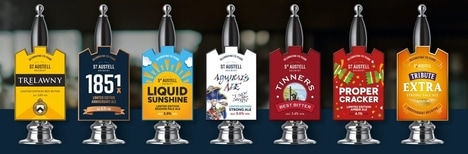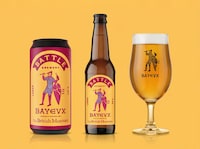
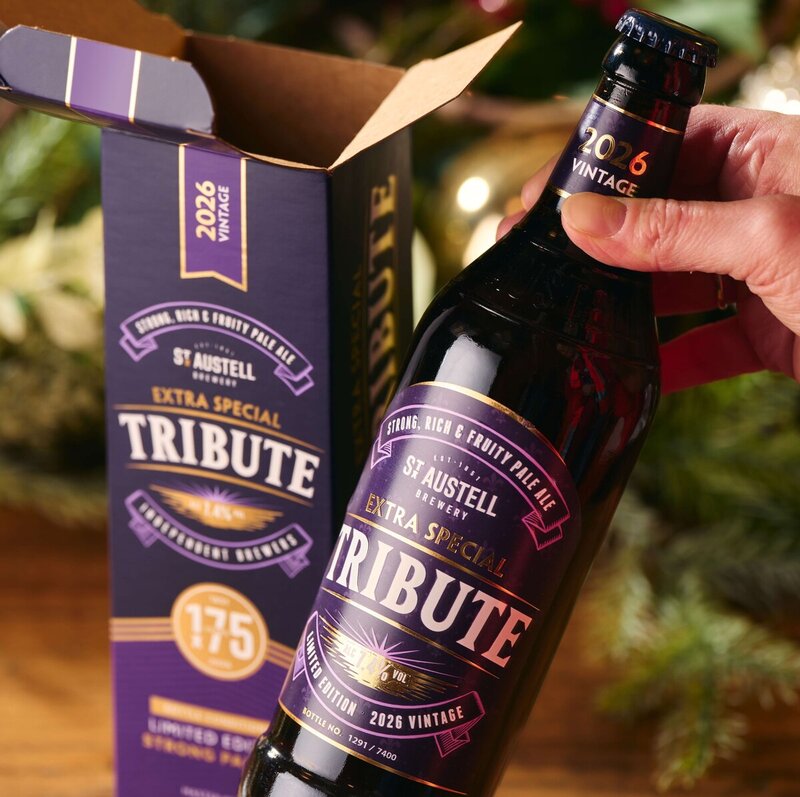
St Austell Brewery has brought back Extra Special Tribute for 2026, turning a coronation one-off into an annual vintage beer for drinkers and collectors who want a different recipe each year. The deep-gold ale comes in a 500ml bottle at 7.4% ABV, offering a stronger take on Tribute that suits both drinking and collecting.
A nationwide Waitrose listing returns for a second year, so the beer reaches UK shelves beyond the brewery's own orbit. Cornish Maris Otter and bottle conditioning give this edition a rounder malt profile and room to keep developing after release, which adds another reason to hold onto a bottle.
A second straight year in Waitrose turns EST into a recurring retail drop rather than a souvenir tied to one event. The annual vintage approach lets St Austell sell familiarity and variation at once, a useful hybrid for a beer that attracts both drinkers and collectors.
Image Credit: St Austell Brewery
What Makes This Trend Stand Out
- Annual Vintage Beers
- Limited yearly recipes create collectible continuity while giving breweries fresh product stories that can sustain premium pricing and repeat anticipation.
- Retail-backed Collectibles
- Supermarket distribution gives niche collectibles broader legitimacy, opening space for premium products that balance accessibility with scarcity.
- Cellarable Craft Ales
- Bottle-conditioned beers with evolving flavor profiles extend product value beyond immediate consumption and support collector behavior in everyday beverage categories.
Sectors Adopting This
- Craft Beer
- Breweries can blend heritage branding with rotating formulations to create recurring releases that appeal to both enthusiasts and casual premium shoppers.
- Grocery Retail
- National grocers benefit from exclusive or recurring specialty drops that transform routine shopping trips into discovery-led purchasing moments.
- Collectibles
- Consumable goods with vintage variation expand collectible culture into food and beverage markets, where rarity and sensory experience reinforce perceived value.