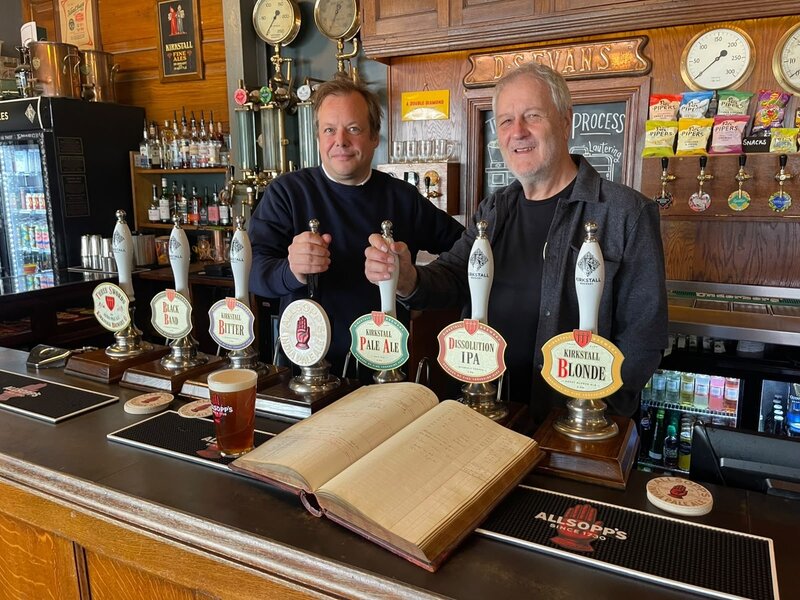
Allsopp's is bringing back the brewery's signature style with Allsopp's IPA, a 4.4% cask beer built from an 1822 recipe and aimed at cask drinkers who want a historic name in a current pint. Rather than recreate a nineteenth-century export beer, it was brewed as a balanced pub IPA with Kirkstall Brewery.
The recipe comes from Allsopp's lone surviving brewing ledger, found in a Leeds pub after Jamie Allsopp's search for family records. Golden Promise barley and Challenger hops keep the beer rooted in British ingredients while steering it toward a deep copper pour and a fuller malt base suited to cask service.
The 4.4% strength and cask format turn archive material into an everyday bar option instead of a nostalgia-only release. That move widens the value of historic brewing records by using them to build contemporary beers that can win repeat orders on quality, not backstory alone.
Image Credit: Allsopp's
What Makes This Trend Stand Out
- Archive-inspired Beers
- Historic brewing ledgers and family recipes are becoming foundations for modern products that blend provenance with repeatable everyday appeal.
- Sessionable Heritage Ipas
- Lower-ABV interpretations of traditional beer styles create space for familiar pub formats that feel authentic without relying on novelty.
- Cask Ale Revival
- Renewed interest in cask formats points to opportunities for breweries to differentiate through texture, freshness, and local serving rituals.
Sectors Adopting This
- Craft Brewing
- Brewers can expand premium positioning by translating archival recipes into balanced contemporary releases with credible ingredient stories.
- Pubs and Bars
- On-trade venues gain distinctive tap offerings when heritage-backed beers provide conversation value alongside consistent drinkability.
- Alcoholic Beverages
- The broader drinks market can use historical authenticity as a platform for products that connect tradition, provenance, and modern consumption habits.