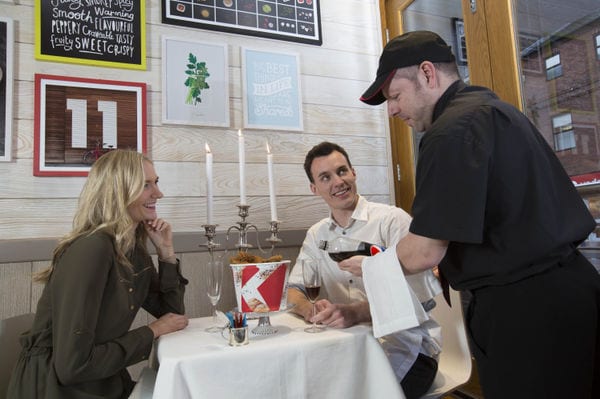
In response to a statistic that revealed only 2% of Danish men love Valentine's Day, chocolatier Anthon Berg wanted to prove how a box of chocolates could instantly inspire romance with a clever chocolate ad video.
'The Valentine Experiment' was conducted as a real scientific experiment, led by Professor Paul Zak and the USC Reproductive Endocine Research Lab. The test involved collecting two vials of a man's blood, before and after telling a female partner the reasons she is so loved and presenting her with a box of chocolates. As a result, it was found that the presence of "the love molecule," or oxytocin was about 27.5% higher in the men after making a romantic connection with their respective partners. In comparison to the gripes about Valentine's Day in the beginning of the experiment, the guys really seem to get in the romantic spirit.
Key Themes Behind This Trend
- Romantic Advertising
- New opportunities for brands to use science-backed messaging to inspire romantic connections and positive consumer engagement.
- Mood-boosting Food
- Food and beverage companies may explore innovative ingredient formulations and packaging to create products that tap into consumers' neurochemistry and activate positive emotions.
- Relationship Science
- There is potential for more scientific experimentation to explore the connections between neurochemistry and interpersonal relationships and how this can be applied across various fields.
Where This Applies
- Food and Beverage
- There are opportunities for companies to create products that use scientific research on neurochemistry to evoke positive emotions and sell better than traditional products.
- Advertising and Marketing
- Brands can leverage emotional and neuroscientific research to develop content that can make a deeper impact on consumer emotions, leading to more engagement and sales.
- Pharmaceuticals and Health
- Companies and researchers can explore the relationship between neurochemistry and interpersonal relationships to develop therapies that may increase feelings of love, trust, and empathy.