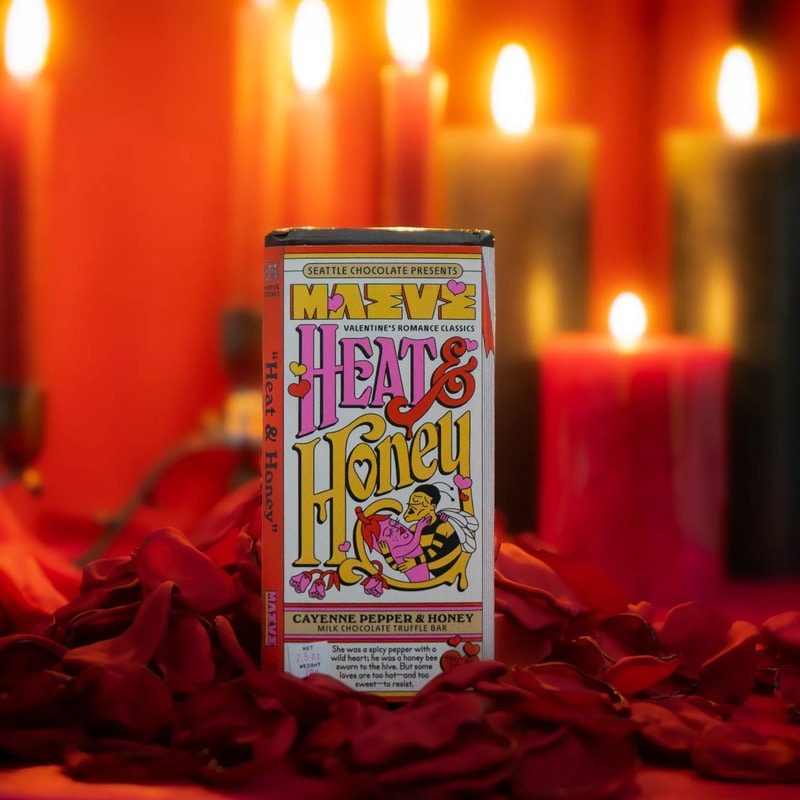
Maeve's giftable Chocolate Romance Collection features designs that cheekily reference paperback clichés and uniquely highlight ingredient pairings. In Forbidden Fruits, pineapple and coconut come together in a tropical romance—but not before surrendering to the dark chocolate. The similarly storied Peanut Butter Banana Affair tells the sale of a tried-and-true pairing—peanut butter and jelly—getting involved with banana in an indulgence in the form of a dark chocolate shell with a white chocolate center.
Tapping into the demand for all things "swicy," Heat and Honey unites the sweetness of honey with fiery cayenne in a classic milk chocolate base. Like romance novels, packaging across the collection includes short, intriguing blurbs that treat snackers and gifters to a refreshingly different experience on Valentine's Day.
Why This Trend Is Growing
- Literary-themed Edibles
- The integration of storytelling into food products offers a playful avenue for creating narrative-driven experiences that captivate consumers.
- Novelty Flavor Combinations
- Innovative flavor pairings in chocolates, such as pineapple-coconut and honey-cayenne, pave the way for unique taste profiles that excite adventurous palates.
- Cultural References in Packaging
- Using packaging that references popular cultural themes, like romance novels, provides brands with a distinctive storytelling element that enhances product appeal.
Industries Being Reshaped
- Specialty Chocolate
- By marrying unique ingredient pairings with narrative-driven themes, the specialty chocolate industry can further differentiate its offerings from conventional products.
- Gifting Market
- The gifting industry finds novel opportunities by presenting products that blend humor and storytelling, making for engaging and memorable gift options.
- Food and Beverage Marketing
- Leveraging cultural references and narrative elements in packaging and marketing creates deeper connections with consumers by aligning with their lifestyle interests.