Capio is a start-up out of California that has a grand vision for how its next-generation speech technology can be applied to the automotive industry.
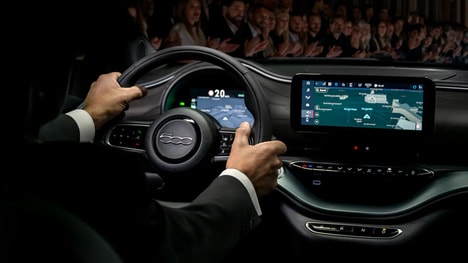
With deep learning speech recognition technology from Capio, a car becomes equipped to interact with people in much more natural, human ways. For instance, Capio's speech recognition system will be extremely aware of context and will also be able to pick up on facial and gesture-based cues such as pointing in order to string together GPS coordinates. The company is currently developing a GPU that will allow for constant connection, whether or not Internet connectivity is available.
Rather than interacting with cars of the future with buttons, a driver's own body may become a tool for communication. Beyond the automotive industry, Capio has applications for call centers, robotics and home automation.
What's Driving This Trend
- Intuitive Speech Recognition
- Capio's technology enables a more natural interaction between humans and machines, creating opportunities for seamless communication in various industries.
- Context-aware AI
- Capio's deep learning system can detect contextual cues and non-verbal signals, paving the way for more personalized and efficient services across industries.
- Gesture-based Interfaces
- Capio's system integrates gesture recognition, allowing for hands-free communication and innovative user interfaces in various settings beyond automotive applications.
Who This Affects Most
- Automotive
- Capio's technology can disrupt the way humans interact with cars, ushering an era of intuitive and personalized driving experiences.
- Call Centers
- Capio's speech recognition can improve customer service by automating basic queries and freeing up human operators for more complex cases.
- Home Automation and Robotics
- Capio's intelligent system can elevate the smart home and robotics industry, eliminating the need for physical buttons and promoting seamless interaction between humans and machines.