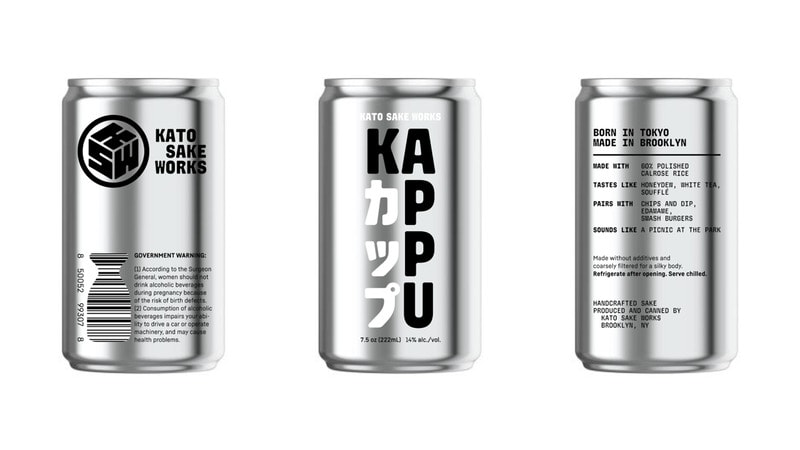
Kato Sake Works recently debuted a canned sake format by the name of Kappu. This move represents a thoughtful evolution in sake accessibility and one that blends Japanese tradition with contemporary American drinking preferences through its ready-to-drink canned format.
The Kappu canned sake comes in 7.5-ounce aluminum vessels, which pay homage to Japan's historic 'one cup' serving tradition while adapting the beverage for modern convenience. Brewed in the junmai style using California-grown Calrose rice, the product maintains traditional sake characteristics, as well. Its ABV content is 14% and the coarse filtration contributes to its "softer body, with notes of subtle sweetness and a clean, crisp finish."
The canned sake format addresses practical needs for picnics, festivals, and casual gatherings where glass bottles prove cumbersome, while the single-serving size allows for controlled portioning uncommon in conventional sake packaging.
Image Credit: Kato Sake Works
Why This Trend Is Growing
- Portable Alcoholic Beverages
- The rise of conveniently packaged alcoholic drinks like canned sake aligns with consumer desires for portability in various social settings.
- Tradition-inspired Modernization
- Integrating cultural heritage with new consumption trends, such as Japanese 'one cup' sake in a modern can, taps into nostalgic yet contemporary experiences.
- Sustainable Packaging Solutions
- Canned sake underscores a movement towards eco-friendly and efficient packaging that appeals to environmentally conscious consumers.
Industries Being Reshaped
- Beverage Industry
- The introduction of canned sake reflects a shift in the beverage industry towards providing ready-to-drink products that cater to modern lifestyles.
- Canning and Packaging Industry
- Innovations in packaging, like aluminum cans for sake, highlight opportunities for the canning industry to expand into new categories of premium beverages.
- Cultural Heritage Products
- Kappu's blend of Japanese tradition and American consumption habits could invigorate an industry focused on reinvigorating cultural products with contemporary appeal.