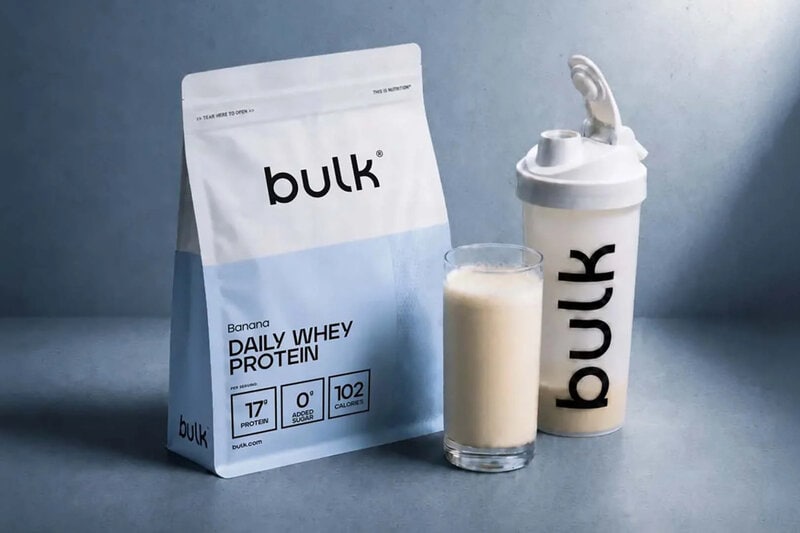
Bulk is expanding its protein powder lineup with ‘Daily Whey Protein,’ a value-led blend for buyers watching supplement costs in its UK and European markets. Instead of using only whey, it pairs soy protein isolate and milk protein isolate with whey concentrate, giving cost-conscious users a lower-priced shake within Bulk’s broader protein lineup.
A 30-gram serving delivers up to 18 grams of protein. At 102 calories, the formula prioritizes affordability over a leaner macro profile. Bulk lists the powder at £19.99 for a 900-gram bag. It also comes in 2-kilogram and 4-kilogram sizes, while ‘Chocolate’ and ‘Vanilla’ keep the line in familiar shake territory.
At about 67p per serving, ‘Daily Whey Protein’ turns protein powder into a staple purchase rather than a premium add-on. That per-serving cost widens Bulk’s appeal to buyers comparing shake prices with protein content rather than extras.
Image Credit: Stack3d
Key Themes Behind This Trend
- Value-first Protein
- Affordable blends are repositioning protein powders as everyday nutrition staples, creating room for brands to compete on cost-per-serving transparency rather than premium performance claims.
- Hybrid Protein Formulas
- Mixed-source formulations using whey, soy, and milk proteins can lower production costs while maintaining familiar product formats for budget-conscious fitness and wellness consumers.
- Bulk Nutrition Packs
- Larger-format supplement packaging supports lower unit pricing and recurring pantry-style purchasing, signaling opportunities in high-volume wellness products built around affordability.
Where This Applies
- Sports Nutrition
- Budget-oriented protein products are broadening category access beyond serious athletes, shifting competition toward practical value and routine consumption.
- Functional Foods
- Protein-enhanced staples with accessible pricing can blur the line between supplements and daily grocery items for consumers managing nutrition on tighter budgets.
- Retail Grocery
- Low-cost supplement formats may gain relevance in mainstream retail as shoppers compare protein density, serving price, and package size alongside conventional food purchases.