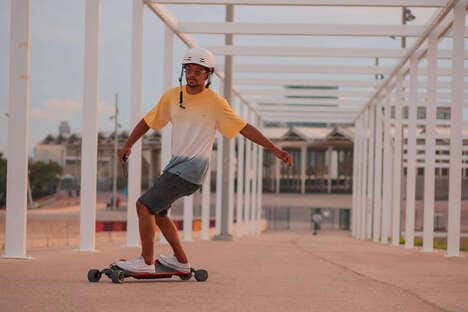
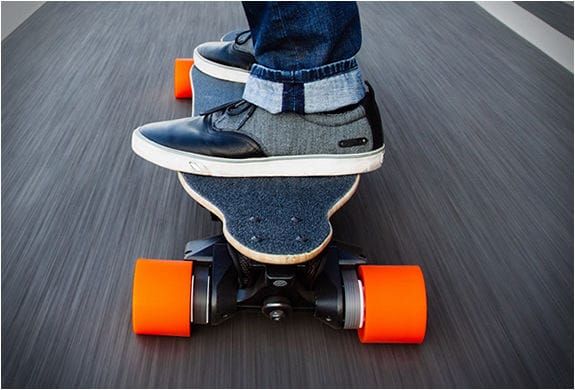
The new Brakeboard is designed for new and casual riders who need some assistance slowing down on those downhill slopes.
Australian longboarder Benjamin Newman came up with this clever idea after realizing the incredible speed on longboards, paired with the skill that is needed to stop oneself at this velocity. The brakes are located in the rear of the board, with two independent clutches equipped to each wheel. An individual activates the brake by stepping onto the back brake pedal which activates two levers that are connected to the back wheels.
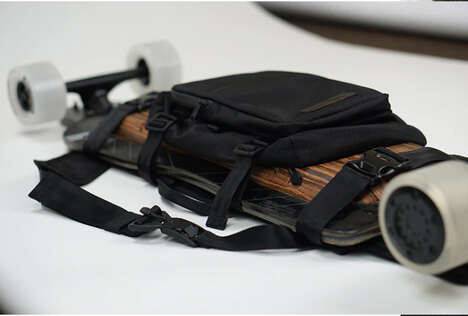
The Brakeboard is set to start manufacture after receiving greater production funds. The products are to be available as an add-on to the rider's current board, or for purchase as a complete board.
What's Driving This Trend
- Brake-equipped Longboards
- The creation of brake-equipped longboards presents opportunities for innovation in the longboard industry by improving safety measures.
- Accessibility of Longboarding
- With the introduction of brake-equipped longboards, the industry can now cater to new and casual riders, thus expanding its consumer base.
- Modular Longboard Design
- Manufacturing and selling brake-equipped longboard add-ons in addition to complete boards suggests an opportunity for longboard companies to explore modular design options.
Who This Affects Most
- Action Sports Industry
- The introduction of brake-equipped longboards presents a potential for growth and innovation within the action sports industry.
- Outdoor Recreation Industry
- The innovation of brake-equipped longboards expands opportunities for outdoor recreation companies to capitalize on the trend and develop products that cater to this market.
- Sustainability Industry
- The manufacturing of brake-equipped longboard add-ons offers a potential for the sustainability industry to capitalize by providing sustainable and eco-friendly materials for these boards.