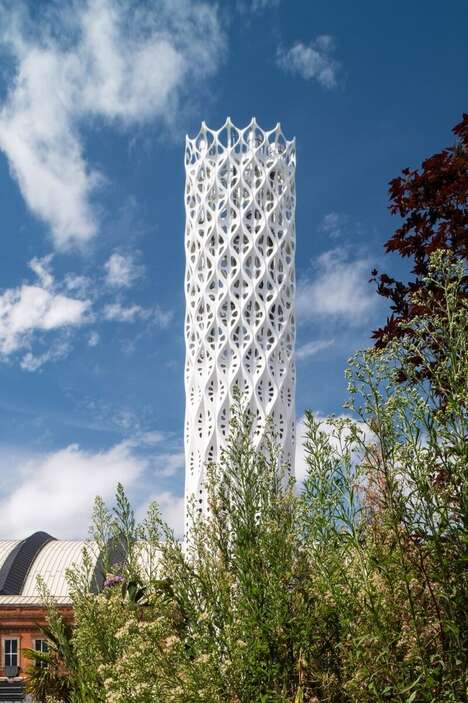
The "Bonescraper" sounds a whole lot more menacing than it actually is, since the name of this remarkable piece of architecture refers to its form rather than its function. The unusual edifice was conceived by a pair of imaginative designers as a submission in the Evolo Skyscraper 2011 Competition.
Together, Melis Eyuboglu and Tuberk Altuntas came up with a concept that would react organically with the existing urban environment of Istanbul, Turkey. Proposed for a site on an old industrial plot, the white fibrous Bonescraper structure will climb up amidst the 250-meter condominiums that have been more recently erected in this transforming neighborhood.
The coral-like latticework of the spiky skyscraper is designed to grow gradually as demand for space within it grows. Over time, the Bonescraper will be plugged with red blood cell-like pods to accommodate spaces for living and recreation as needed.
Why This Trend Is Growing
- Organic Architecture
- The Bonescraper's coral-like latticework inspired by human biology demonstrates potential for eco-friendly and integrative architectural innovations.
- Adaptive Building Structures
- The Bonescraper's gradual growth via red blood cell-like pods highlights opportunities for adaptive building strategies and modular construction.
- Living Skyscrapers
- The Bonescraper's planned spaces for living and recreation within its spiky structure showcases potential for mixed-use buildings and vertical communities.
Industries Being Reshaped
- Architecture
- The Bonescraper provides inspiration for architects to incorporate organic forms and adaptive strategies into future building designs.
- Construction
- The Bonescraper's modular and plug-in design presents opportunities for increased efficiency and flexibility in the construction industry.
- Real Estate
- The Bonescraper's mixed-use features suggest potential for real estate developers to invest in innovative and sustainable solutions for urban growth.