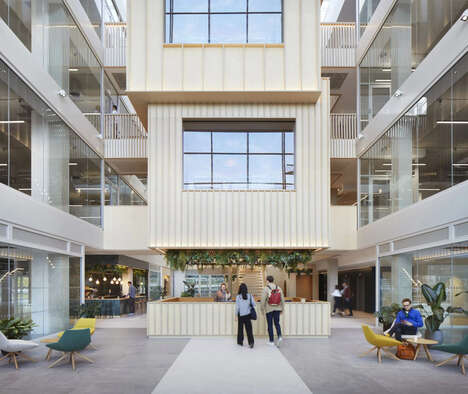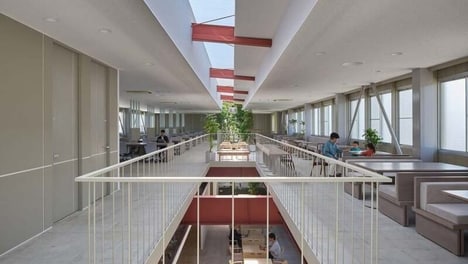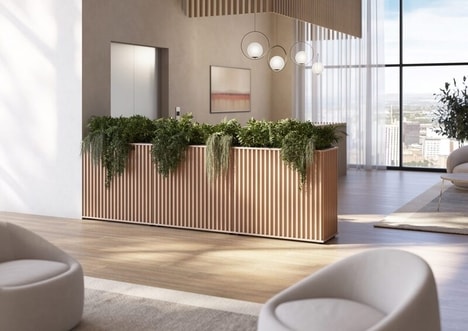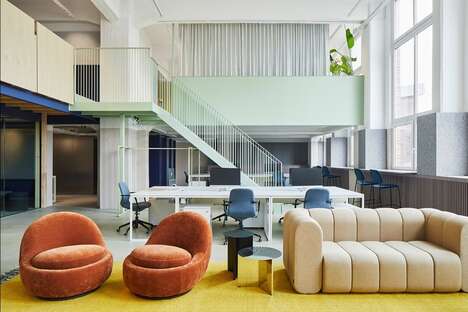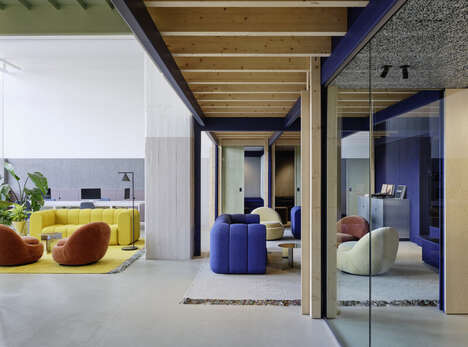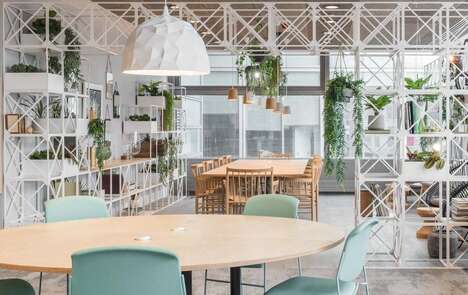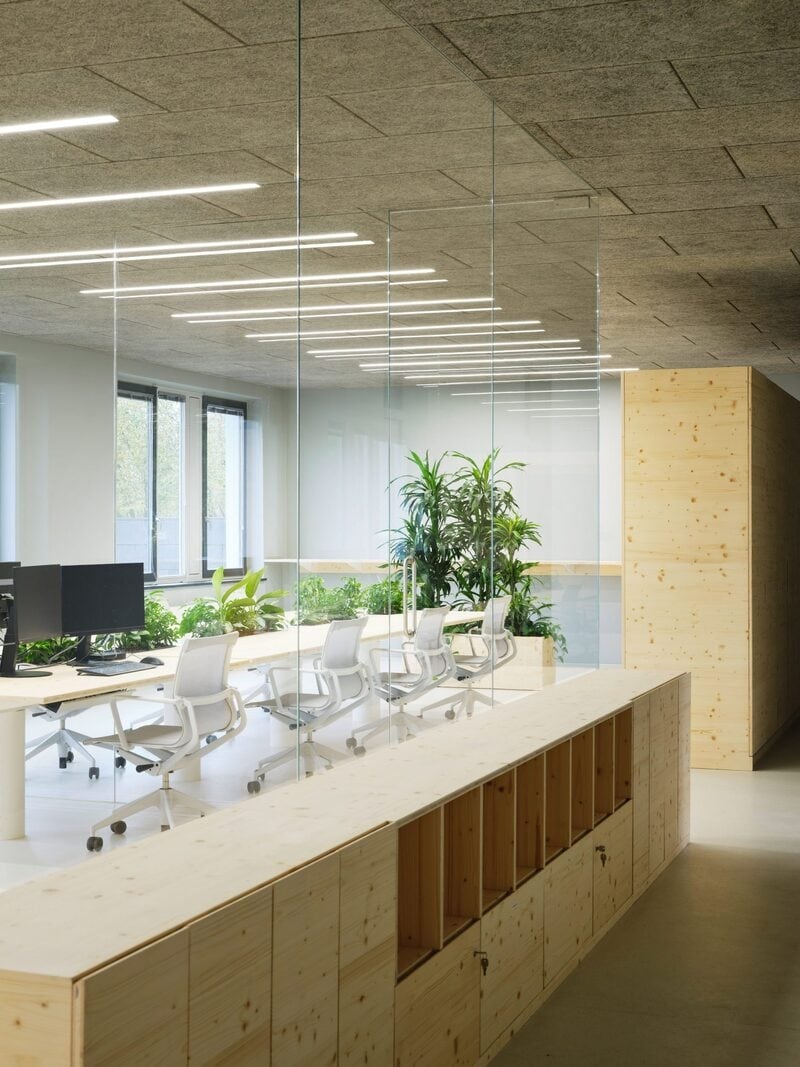
Zeller & Moye’s Bochum HQ for medical software firm Pradtke spans around 500 m² and redefines workplace norms by integrating nature and flexible design. Central to the layout are built-in wooden planters and an indoor garden that introduces foliage into every zone—from collaborative desks to private cubicles—promoting a calming, green environment.
A standout feature is the “walkable landscape,” where felt-covered terrain creates tiered seating and breakout areas that encourage movement, informal meetings, and remote work. The office also includes acoustically insulated booths, movable furniture, and glazed partitions to support varied work modes and spatial adaptability. Natural materials like wood, felt, and linoleum imbue the space with warmth and tactility.
Developed through workshops with staff, the design prioritizes user wellness and social interaction. Ample daylight filters through full-height glazing that frames plant clusters, making greenery part of both the visual and social fabric. This thoughtfully crafted environment goes far beyond conventional office layouts, offering zones for focused tasks, creative brainstorming, events, rest, and quiet reflection—all unified by a biophilic, flexible ethos that rethinks modern work.
Image Credit: Andreas Gehrke
Key Themes Behind This Trend
- Biophilic Office Design
- Integrating natural elements like plant life and daylight in office environments fosters employee well-being and productivity by connecting them to nature.
- Flexible Workspace Architecture
- Adaptable office designs featuring movable furniture and diverse work zones accommodate various work styles and promote an agile work environment.
- Acoustic Privacy Solutions
- Incorporating acoustically insulated booths and sound-absorbing materials addresses the need for privacy and quiet in open-plan office settings.
Where This Applies
- Office Furniture
- The demand for versatile furniture that supports flexible work environments has increased, emphasizing innovation in movable and modular product designs.
- Architectural Design
- There is a growing trend towards integrating natural elements in architectural projects, creating opportunities for firms that specialize in biophilic and sustainable designs.
- Interior Design
- Designers are focusing on incorporating tactile, natural materials to enhance the sensory experience in workspaces, encouraging a reimagining of interior aesthetics.