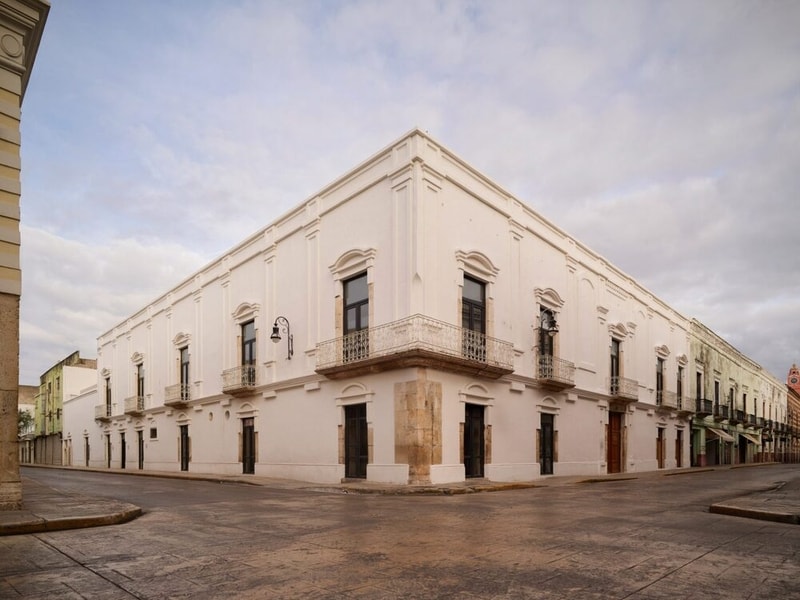
The Hotel Sevilla project in Mérida, Mexico transforms a 16th-century colonial villa into a boutique hotel through a series of contemporary architectural additions. Designed by Berlin-based studio Zeller & Moye in collaboration with architect Carlos Cuevas, the project preserves much of the historic structure while introducing new concrete volumes that contrast with the existing architecture. The interventions create guest rooms and communal spaces arranged around the restored courtyard and pool.
The design intentionally highlights the difference between historical and contemporary elements. Original features such as stone walls, wooden ceilings, and tiled colonnades were restored, while new additions use exposed concrete and minimalist detailing. The hotel contains 21 rooms along with a bar, restaurants, and spa facilities. Landscaping with tropical plants helps organize the courtyard spaces and reinforces the relationship between the architecture and the surrounding climate.
Image Credit: Fernando Marroquín
What Makes This Trend Stand Out
- Adaptive Reuse with Brutalist Insertions
- A growing design approach pairs preserved historic fabric with raw concrete additions, creating hybrid buildings that redefine heritage value and guest expectations.
- Concrete Minimalism in Boutique Hospitality
- Exposed concrete and restrained detailing are becoming a hallmark of intimate hotels, shifting perceptions of luxury toward material honesty and textural contrast.
- Courtyard-centric Tropical Programming
- Landscaped courtyards and climate-responsive outdoor rooms are being prioritized to blur indoor-outdoor boundaries and recalibrate guest circulation and amenity placement.
Sectors Adopting This
- Boutique Hotel Development
- Smaller-scale hotel projects are being reconceived as curated assemblages of old and new, changing financing models and lifecycle planning for heritage properties.
- Architectural Design Firms
- Design practices that can combine conservation craftsmanship with radical contemporary forms are positioned to reshape client briefs and competitive differentiation.
- Concrete and Masonry Construction
- Suppliers and builders specializing in exposed concrete finishes and sensitive integration with historic masonry are influencing material specifications and construction sequencing.