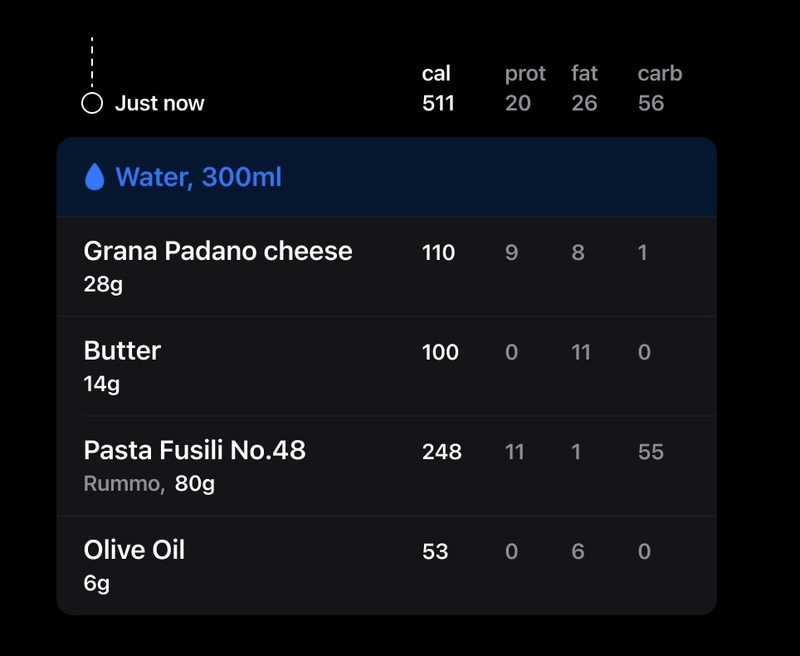
Plate Notes is a digital food diary that organizes meal tracking through a chronological feed rather than traditional categories. Instead of logging food under predefined sections such as breakfast, lunch, or dinner, users record meals individually as they occur, creating a timeline of eating activity throughout the day.
The interface is designed to resemble a message or social media feed, allowing entries to be added quickly and viewed in sequence. This approach focuses on simplicity and real-time logging, encouraging users to capture meals as they happen rather than entering them retrospectively.
From a product design perspective, the concept reflects a broader shift toward more intuitive and familiar interfaces in personal tracking tools. By adopting a feed-based format, Plate Notes aims to make food journaling feel more natural and integrated into everyday digital habits.
Image Credit: Plate Notes
What's Driving This Trend
- Feed-based Tracking
- A chronological feed reframes eating events as a continuous behavioral stream, creating opportunities for algorithms to detect patterns and contextual correlations across time.
- Real-time Micro-logging
- By emphasizing immediate, bite-sized entries over batch retrospective logging, this approach yields high-granularity timestamps and context that can improve temporal analysis of consumption habits.
- Social-style Personal Data
- This familiar, message-like interface transforms private health inputs into shareable, narrative-format records that blur lines between social engagement and self-monitoring.
Who This Affects Most
- Nutrition Technology
- Dietary platforms and recommendation engines could leverage timeline data to refine macronutrient and meal-timing personalization based on real-world eating sequences.
- Wearable Health Devices
- Wearables integrated with micro-logging feeds would provide richer contextual overlays of physiological signals against precise eating timestamps, enhancing inference of cause-and-effect relationships.
- Food Retail and Services
- Retailers and foodservice providers might use aggregated timeline trends to tailor time-sensitive promotions and product assortments aligned with observed consumption rhythms.