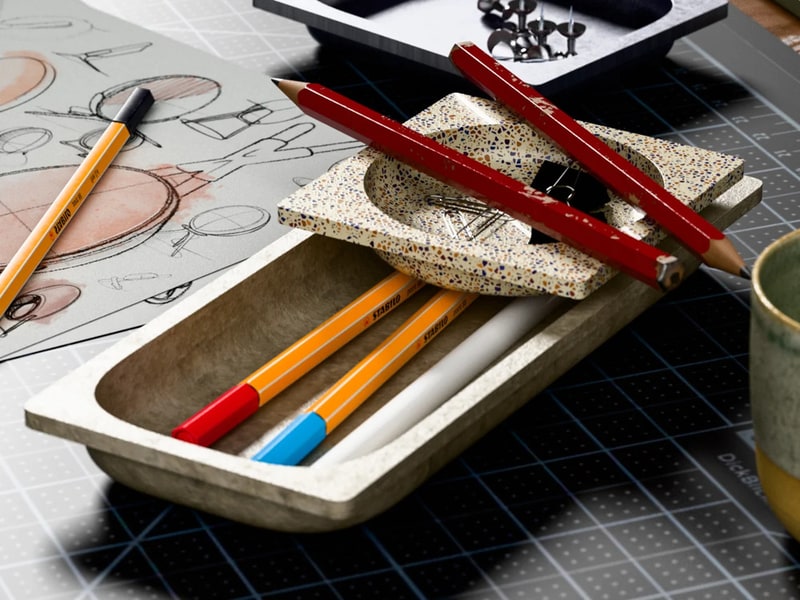
The BloomCase by Somya Chowdhary is a modular desk organizer made from concrete, metal, and stone, designed to expand as workspace needs change. The base unit combines circular basins and rectangular compartments, separating small loose items from tools like pens and pencils through a clearly defined layout. Its weight keeps it stable without additional grips, allowing it to stay fixed even when fully loaded.
An interlocking system allows multiple units to snap together, forming a continuous surface that can be extended or rearranged over time. The connection is designed to remain secure while still allowing repositioning, so layouts can shift depending on use. Each module maintains the same footprint and geometry, enabling combinations without disrupting the overall form. The organizer uses raw concrete with softened curves, pairing a heavy material with rounded basins to define both structure and storage.
Image Credit: Somya Chowdhary
What's Driving This Trend
- Modular Snap-fit Design
- A standardized interlocking geometry for small desktop modules enables scalable, reconfigurable product ecosystems that break traditional single-piece accessory models.
- Heavy-material Minimalism
- The pairing of dense materials like concrete with softened forms creates a tactile, durable aesthetic that redefines perceived luxury and longevity in everyday objects.
- Expandable Work Surface Systems
- Interchangeable units that preserve footprint and geometry support gradual workspace evolution, allowing layouts to grow or shift without replacing the entire system.
Who This Affects Most
- Office Accessories
- Desk-organizer ranges based on modular concrete components can introduce premium, long-lasting options that compete with plastic and fabric counterparts on durability and design.
- Furniture Manufacturing
- Modular connection systems offer new product lines of configurable surfaces and storage that blend architectural materials with mass-market assembly techniques.
- Workplace Interior Design
- Design firms can incorporate snap-fit modular elements into flexible layouts, enabling phased installations and varied tactile experiences across shared work environments.