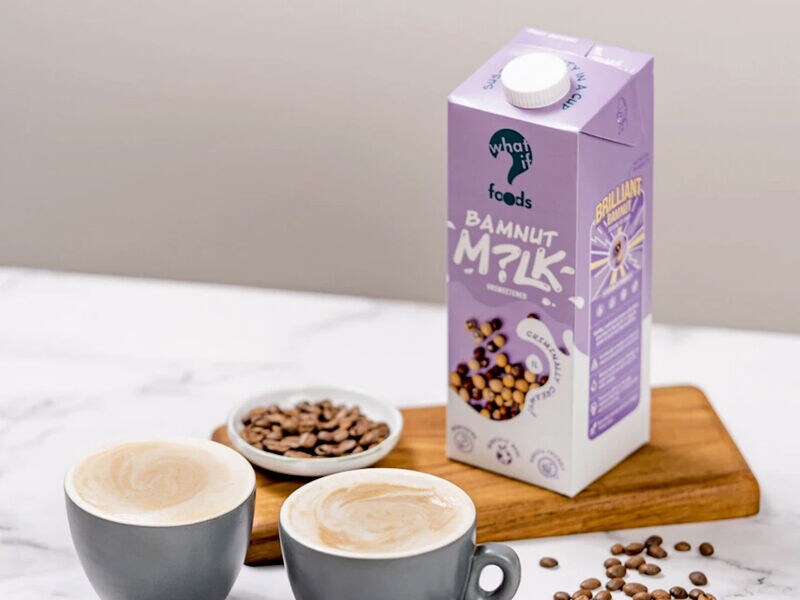
Singapore food tech brand WhatIF Foods recently launched a new climate-resilient plant-based milk called BamNut Milk. The beverage is made from a base of the regionally grown Bambara groundnuts, with other ingredients like coconut oil and shea butter.
The Bambara groundnut is dubbed as a “future fit” crop for its ability to grow on arid land with minimal water, and also restore the land by boosting the nitrogen in the soil. According to WhatIF Foods, the carbon footprint of BamNut Milk is 75% less than the cow’s milk the country imports from New Zealand.
Moreover, the use of shea butter and coconut oil as ingredients gives the milk a creamy quality and allowing it to be more versatile. As a result, BamNut Milk can be used as foam and froth to create lattes or bubble teas.
Image Credit: BamNut Milk
Why This Trend Is Growing
- Climate-resilient Plant-based Alternatives
- More brands are researching and developing sustainable plant-based alternatives that are better for the environment.
- Regenerative Farming Techniques
- The use of future fit crops that can both grow on arid land with minimal water and restore the land with sustainable farming techniques can improve soil quality and contribute to greenhouse gas reductions.
- Innovative Milk Formulations
- Innovative and versatile milk formulations that can be used as foam and froth to create lattes or bubble teas can provide new opportunities for food and beverage companies looking to add value to their product offerings.
Industries Being Reshaped
- Foodtech
- Companies focused on the intersection of technology and food may be able to develop and market new climate-friendly plant-based alternatives based on innovative farming and production methods.
- Sustainable Agriculture
- Sustainable agriculture can play a critical role in addressing the pressing issues of climate change and food security by creating regenerative farm systems that restore soil quality, reduce greenhouse gas emissions, and ensure long-term food production.
- Food and Beverage
- Food and beverage companies can explore new milk formulations and value-added products made from innovative plant-based ingredients in response to demand for sustainable and healthier food alternatives.