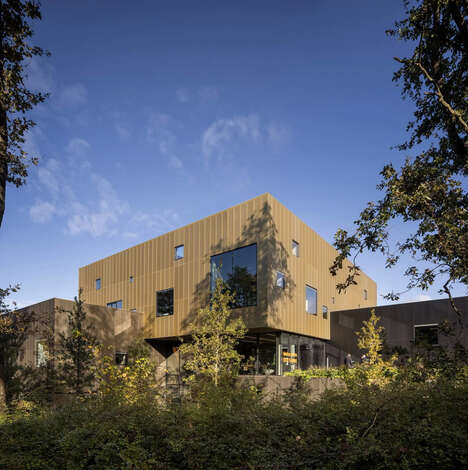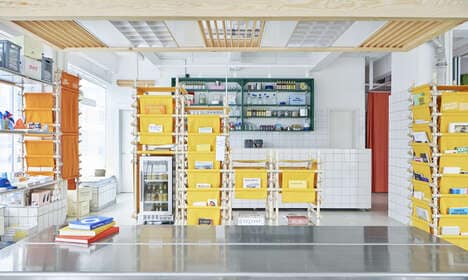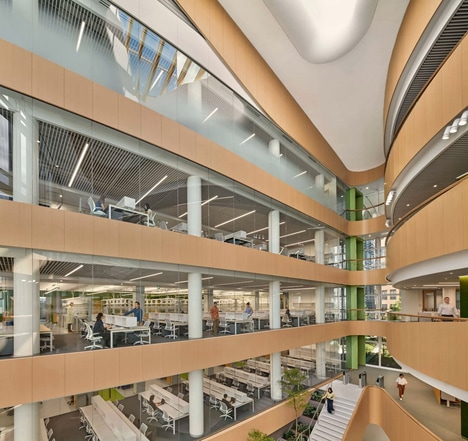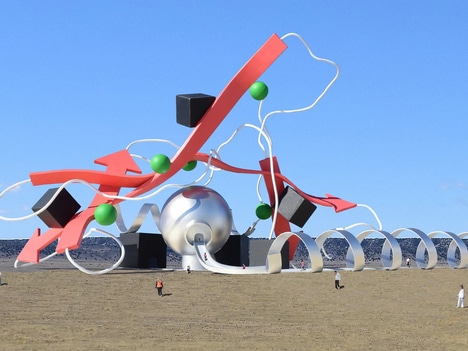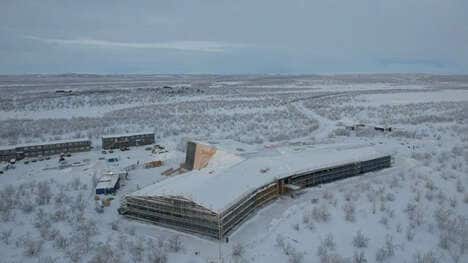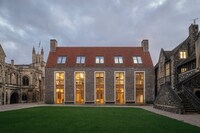
The European Spallation Source campus, a collaborative effort by Danish studios Henning Larsen and Cobe, introduces a pioneering infrastructure for atomic-science research. Located in Lund, Sweden, the facility offers a distinct focus on neutron generation using spallation technology.
The cutting-edge space, considered to become "the world's most advanced neutron source," presents innovative design principles tailored to the specific demands of atomic-science research. The architectural concept is centered around creating a village-like atmosphere through a collection of buildings, each thoughtfully designed to serve various functions while maintaining a unified design language. A noteworthy achievement for Henning Larsen and Coobe, for example, is the integration of the proton accelerator beneath the campus, concealed beneath a berm of soil to harmoniously blend with the landscape.
Image Credit: Rasmus Hjortshøj
Key Themes Behind This Trend
- Atom-specific Research
- The European Spallation Source pioneers atom-specific research through its cutting-edge neutron generation technology.
- Unified Design Language
- The architectural concept of the European Spallation Source focuses on a unified design language to create a village-like atmosphere.
- Concealed Infrastructure Integration
- The European Spallation Source achieves a remarkable feat by integrating the proton accelerator beneath the campus, concealed beneath a berm of soil.
Where This Applies
- Scientific Research
- The European Spallation Source contributes to advancements in scientific research by providing cutting-edge facilities for atomic-science studies.
- Architectural Design
- The innovative architectural design of the European Spallation Source showcases the potential for creating unified and functional spaces for specialized purposes.
- Engineering
- The concealed integration of the proton accelerator beneath the European Spallation Source highlights engineering opportunities to seamlessly incorporate infrastructure within the natural landscape.