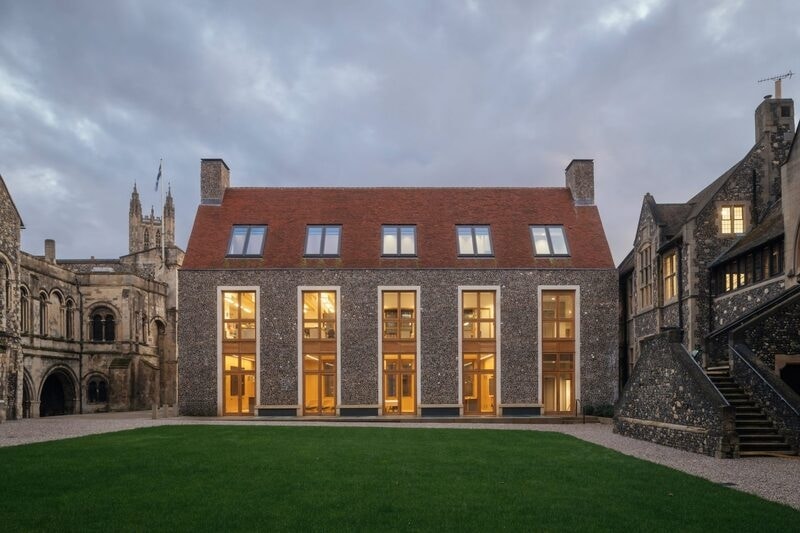
The Rausing Science Centre by Walters and Cohen adds six physics labs and a 120-seat lecture hall to the King’s School campus. The building replaces a 1970s structure and stays within the same footprint by lowering the basement level to meet the required ceiling heights. The exterior uses snapped quarried flint combined with horizontal bands of knapped flint and French limestone, matching the material language of the nearby cathedral. The massing remains compact to respect the surrounding heritage boundaries, and the facade detailing follows the patterning found across the precinct.
The interior contains purpose-built teaching spaces with lab layouts arranged for clear sightlines and equipment access. The lecture hall can be divided into two classrooms using integrated partitions, allowing flexible use throughout the day. Circulation runs along the outer edges to maintain quiet lab areas, and building services are organised in a central core. The project completes a long-term upgrade of the school’s science facilities.
Image Credit: Jim Stephenson
What's Driving This Trend
- Adaptive Space Utilization
- Innovative design solves spatial constraints by clever manipulation of existing structures, such as lowering basements to increase usable space within historical sites.
- Sustainable Material Use
- There's a growing emphasis on employing locally sourced materials, like flint and limestone, which align with both aesthetic preservation and environmental considerations.
- Flexible Learning Environments
- Incorporating modular layouts in educational spaces, such as lecture halls that divide into smaller classrooms, offers versatile usage and optimizes limited space.
Who This Affects Most
- Architectural Design
- Innovations in architectural design focus on integrating modern needs with historical preservation through adaptive reuse of existing footprints.
- Educational Infrastructure
- The push towards modernized facilities emphasizes the importance of advanced labs and flexible learning spaces to support next-generation education.
- Construction and Building Materials
- Utilizing traditional and locally-sourced materials in contemporary constructions respects cultural heritage while reducing environmental impact.