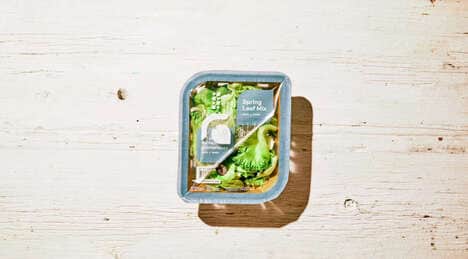


You're still going to want to make sure that you've rinsed your vegetables thoroughly before eating them, but this anti-biofilm packaging innovation greatly reduces the instance of food contamination. Bacteria on produce has long been a problem for food suppliers and consumers alike, but increasing demands and high-volume shipping only make the problem more prevalent.
Under Professor Doron Steinberg, Michael Brandwein of the Hebrew University of Jerusalem was able to synthesize a molecule that can be used in superior food-safe packaging. TZD has anti-biofilm properties that prevents the formation and proliferation of microbes and fungi on the surfaces of the otherwise healthiest foods. Applications for the invention of the anti-biofilm material are coating inside bags and boxes, and even extending its use within recycled water systems to prevent illness-causing germs.
What Makes This Trend Stand Out
- Anti-biofilm Packaging
- Innovative packaging materials that prevent the formation and proliferation of bacteria and fungi on food surfaces.
- High-volume Shipping
- Increasing demands and high-volume shipping create a greater need for food packaging innovations that address the problem of food contamination.
- Recycled Water Systems
- Utilizing anti-biofilm materials within recycled water systems can help prevent the spread of illness-causing germs.
Sectors Adopting This
- Food Packaging
- The food packaging industry can benefit from incorporating anti-biofilm materials to reduce food contamination and ensure product safety.
- Food Supply Chain
- Innovative packaging solutions are crucial for the food supply chain industry to maintain the quality and safety of perishable produce during high-volume shipping.
- Water Treatment
- The water treatment industry can explore the use of anti-biofilm materials in recycled water systems to improve sanitation and prevent the spread of germs.