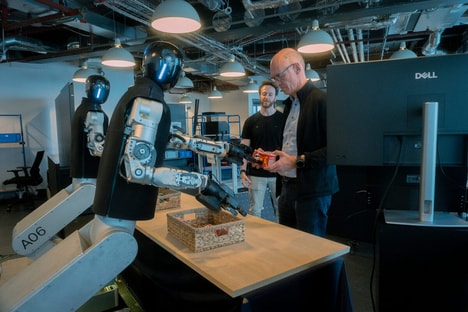
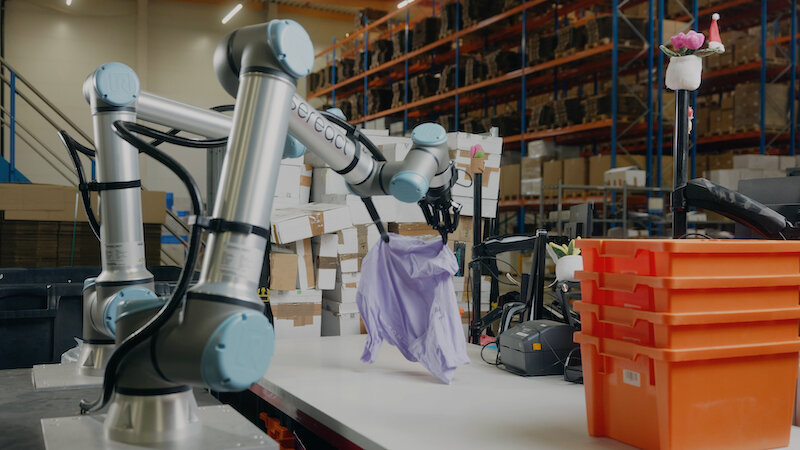
Sereact is turning returned fashion items into a faster, more automated workflow for Zalando with AI-powered processing built on Cortex. The setup uses dual-arm robotic systems to identify, grasp and sort items in live operations across fulfillment sites in Greven, Germany, and Świebodzin, Poland.
Cortex is built to handle objects it has not seen before, without article-specific training or pre-set item libraries. That lets the system work beside people instead of replacing the whole returns floor, while taking on repetitive handling that can wear workers down.
The Greven and Świebodzin rollout gives Zalando and CEVA Logistics a practical test bed for scaling returns automation across Europe. By pairing robotic sorting with human oversight, the model could make fashion returns less labor-heavy for other e-commerce operators facing the same sorting bottleneck.
Image Credit: Retail Technology Innovation Hub
Why This Trend Is Growing
- Autonomous Returns Processing
- AI-enabled robotic handling is transforming reverse logistics by reducing manual sorting friction and creating scalable pathways for high-volume e-commerce returns.
- Generalist Robotic Manipulation
- Robots capable of identifying and grasping unfamiliar items without pre-training signal a shift toward more flexible automation in unpredictable operational environments.
- Human-robot Fulfillment Teams
- Collaborative workflows that pair robotic repetition with human oversight are reshaping warehouse labor models while preserving adaptability on complex fulfillment floors.
Industries Being Reshaped
- E-commerce
- Online retailers are gaining new efficiency potential through automated return systems that address costly bottlenecks in post-purchase operations.
- Fashion Retail
- Apparel brands face mounting return volumes, making intelligent item recognition and sorting a high-value area for operational differentiation.
- Logistics and Warehousing
- Third-party fulfillment providers can expand service capabilities by integrating AI robotics into returns centers and other variable-item handling processes.