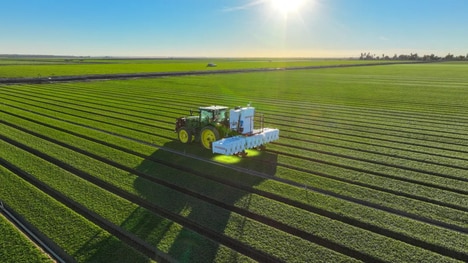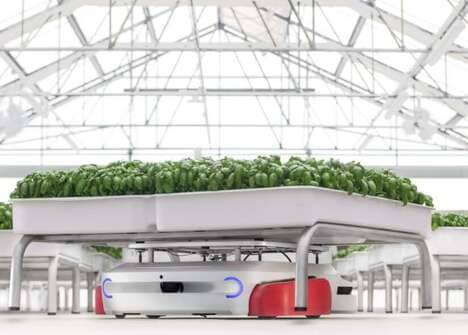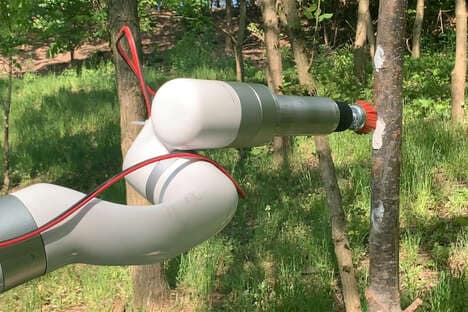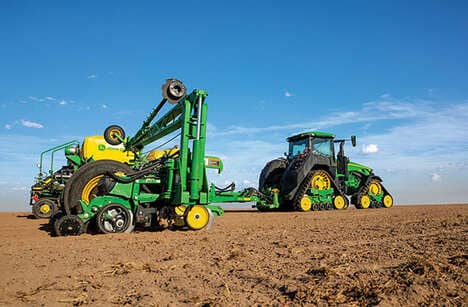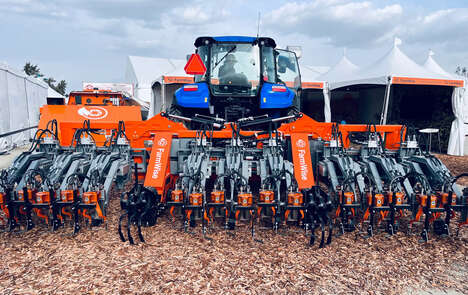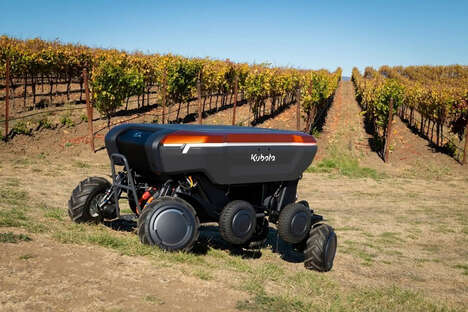


The use of agricultural robots will likely continue to be a reality in a bid to help further optimize crop production which the Crop Phenotyping Robot identifies perfectly. Being that phenotyping is a tedious albeit necessary task for farmers, the Crop Phenotyping Robot comes as an effective solution to help increase overall efficiency.
Developed by a team of researchers at the University of Illinois led by Professor Stephen P. Long, the Crop Phenotyping Robot works on a semi-autonomous basis to gather phenotypic data from the fields as it navigates the terrain. The team hopes to get the agricultural robots to market by 2021 at a cost of $5,000, which would come as a welcome solution as worldwide crop demands continue to increase.
What Makes This Trend Stand Out
- Agricultural Robotic Automation
- The use of agricultural robots to optimize crop production continues to grow, offering opportunities for automation in the agricultural industry.
- Precision Crop Phenotyping
- The Crop Phenotyping Robot's ability to accurately assess crop health opens up possibilities for precise crop monitoring and targeted interventions.
- Technological Advancements in Farming
- The development of Crop Phenotyping Robot showcases the ongoing advancements in agricultural technology, creating disruption and innovation opportunities in the farming sector.
Sectors Adopting This
- Agriculture
- The agricultural industry can capitalize on agricultural robotic automation to improve efficiency and productivity in crop production.
- Robotics
- The robotics industry can benefit from the demand for precision crop phenotyping robots, offering opportunities for product development and innovation.
- Farming Technology
- The advancements in farming technology, exemplified by the Crop Phenotyping Robot, present opportunities for disruption in the farming industry through the integration of automation and data-driven insights.