Scientists from MIT in Cambridge, Massachusetts recently released news of a 3D printing innovation that could launch thousands of new applications for the technology.
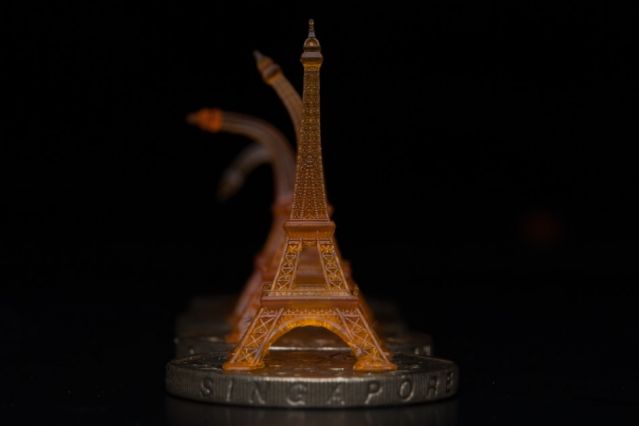
The release described that engineers from MIT and Singapore University of Technology and Design (SUTD) have been experimenting with light to print 3D structure that can "remember" their original forms. This means that the 3D-printed objects can be bent, stretched, twisted or otherwise contorted and still return to their original shapes. Objects included in this experiment took the form of a small heat-responsive Eiffel Tower, as well as flowers that were used to grip small screws.
This 3D printing innovation could be useful for a number of applications. Nicholas X. Fang, associate professor of mechanical engineering at MIT lists "soft actuators that turn solar panels toward the sun" and "tiny drug capsules that open upon early signs of infection" as a few ideas.
What Makes This Trend Stand Out
- Shape-memory 3D Printing
- The introduction of 3D printed objects that can 'remember' their original shapes and return to them is a groundbreaking revolution that can yield reusable tools and structures, reducing waste and increasing efficiency.
- Flexible 3D Printing
- MIT's flexible 3D printing and the 'remembering' capabilities of its printed objects can offer innovative opportunities in design and product development for companies in the automotive, aerospace, and medical industries.
- Adaptive Manufacturing
- The use of shape-memory 3D printing can revolutionize adaptive manufacturing by allowing the production of objects that can respond and adapt to their environment, all with a single manufacturing process.
Sectors Adopting This
- Automotive
- Automotive manufacturers can explore 3D-printed, shape-memory materials for customizable, lightweight parts that improve aerodynamics, fuel efficiency and saves costs.
- Aerospace
- Aerospace companies can innovate by creating responsive satellite components and lightweight spacecraft using shape-memory 3D printing, saving time and improving speed, reliability, and safety.
- Medical
- Shape-memory 3D printing can yield capsules and other medical equipment that reshape to adjust to individual needs, improving efficiency and reducing waste in the medical industry.